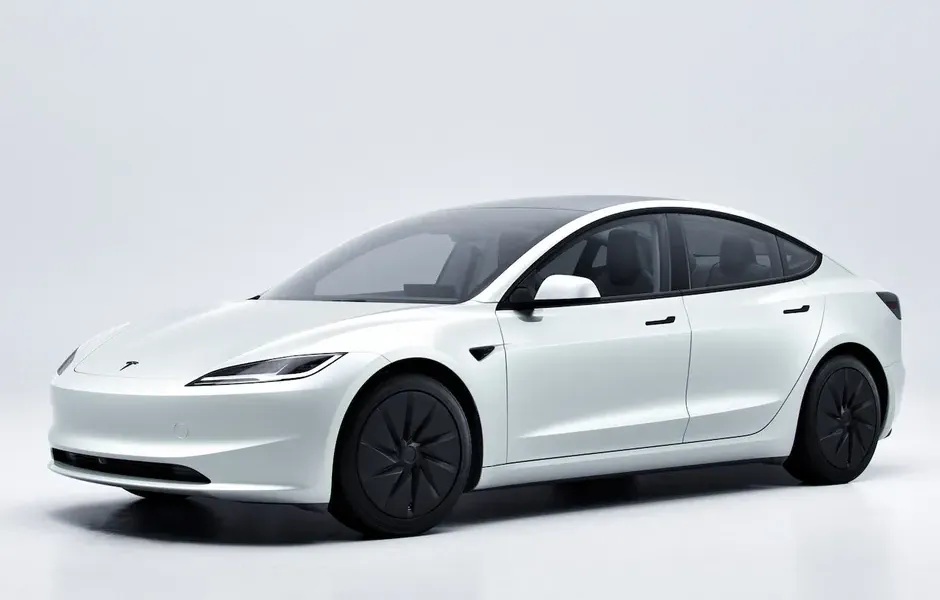
Atlanta has one of the highest concentrations of Tesla vehicles in the Southeast. Midtown, Buckhead, Decatur, Virginia-Highland — these neighborhoods have become some of the most EV-dense areas in Georgia. That concentration shows up at our shop at 510 Glen Iris Dr NE on a weekly basis. Tesla windshield jobs have become a core part of what we do.
Teslas are not difficult to service because of any single unusual component. The challenge is that several factors have to go right simultaneously: glass spec, adhesive cure, camera reinstallation, and calibration sequence. Miss one and an otherwise clean windshield job produces Autopilot errors, wind noise, or a slow leak. Here is what those factors actually mean in practice.
Every Tesla windshield job is also a camera job
Three forward-facing cameras sit in a housing behind the rearview mirror at the top center of every Tesla windshield currently in production. These cameras are the foundation of the Autopilot system. Lane detection, forward collision warnings, Traffic-Aware Cruise, and Full Self-Driving features all depend on what those cameras see through the windshield glass.
The optical properties of the replacement pane are not just about driver visibility — they directly affect whether the Autopilot cameras can read the road accurately. An aftermarket pane with a different refractive index in the interlayer, or a pane installed at a fractionally different angle than the factory glass, can produce calibration errors. We have had vehicles come to us from other shops because the cameras would not complete calibration after a windshield replacement. In most cases, the issue was a glass spec problem or a camera mount that was not seated correctly.
Recalibration after replacement has two distinct stages. The first is a static check done in-shop: confirming camera mount position and that all sensors are reconnected properly. The second is a dynamic phase that happens during normal driving after the job is done. Tesla’s camera system uses lane markings, road edges, and environmental reference objects encountered in traffic to refine its understanding of exactly where each camera is pointing. This typically takes 25 to 50 miles, sometimes more, before the system finishes and declares calibration complete. Autopilot features are restricted during this window. That is designed behavior, not a sign the installation went wrong.
We explain the dynamic calibration process to every Tesla owner before they leave our shop. The experience of Autopilot being unavailable for the first 30 miles after a windshield replacement is alarming when you are not expecting it and completely unremarkable once you understand why it happens.
Why acoustic glass matters more in an EV
Tesla windshields use a laminated construction with an acoustic PVB interlayer — polyvinyl butyral, the layer sandwiched between the two glass sheets. Tesla specifies a thicker, more sound-absorbing version of this interlayer than standard auto glass, which contributes to the notably quiet cabins Tesla vehicles are known for.
This matters more in an EV because there is no engine noise to mask anything. A gasoline car at highway speed has powertrain hum, exhaust tone, and road noise filling the cabin in a way that makes a slight increase in wind noise from a windshield issue essentially undetectable. A Tesla at 70 mph on I-285 is otherwise near-silent. Any wind noise from a lifted edge, a bond gap, or an aftermarket pane with the wrong acoustic interlayer is immediately obvious and irritating.
We see this fairly often when Tesla owners come to us after a replacement elsewhere. The car has wind noise it never had before. The prior shop cannot explain it. The answer is almost always a glass specification problem — the replacement pane’s interlayer does not match Tesla’s acoustic spec.
No engine heat and what it means for chips
Internal combustion engines produce waste heat that flows through the dashboard and warms the base of the windshield. Teslas have no such heat source. The glass stays at ambient temperature overnight and in the morning.
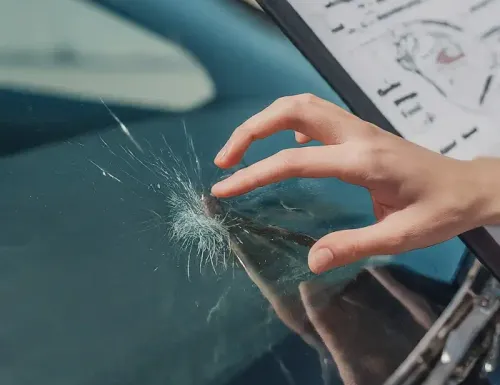
In Atlanta, this distinction matters more than most people realize. The region gets cold enough in winter for significant thermal stress across existing chips. When morning sun warms the outer glass surface and the climate system starts moving warm air from the vents, the temperature differential across a chip is sharper in a Tesla than in a gasoline vehicle. Chips that might survive a Georgia winter in a conventional car have a higher rate of spreading in Teslas because of this absent floor heat.
Address chips promptly. The window before a chip spreads is shorter in a Tesla than most other vehicles on the road.
Glass supply varies significantly by model
Tesla OEM glass is manufactured to the same specifications as the factory-installed pane. Aftermarket options have improved over the past several years for the high-volume models, but quality and availability depend heavily on which vehicle you drive.
Model 3 and Model Y: High production volumes mean reputable aftermarket glass meeting Tesla’s optical and acoustic spec is widely available. Same-day service is realistic for most jobs.
Model S: Lower production volume means OEM lead times are longer and aftermarket options require more careful vetting. The Model S acoustic spec is also more demanding than the 3 and Y.
Model X: The windshield is large enough and sufficiently distinctive that aftermarket availability is limited. We default to OEM glass for this model.
Cybertruck: Most constrained supply of any Tesla model. The vehicle is newer, production volumes are lower, and the glass spec interfaces specifically with the stainless steel exoskeleton. Expect longer lead times and higher costs. We are straightforward about this at the time of quoting.
Common Tesla windshield issues we handle
| Issue | Why it matters | Our approach |
|---|---|---|
| Chip in camera zone (top center) | Can cause calibration errors even when structurally filled | Replace the glass |
| Chip under 1 inch away from camera zone | Can spread rapidly in Atlanta summer heat | Evaluate for resin repair |
| Edge chip or crack | Spreads quickly, difficult to seal with resin | Replacement recommended |
| Crack over 6 inches | Compromises structural integrity | Full replacement |
| Wind noise after prior replacement | Glass spec mismatch or adhesive bond failure | Diagnose and reinstall with correct glass |
What service at our shop looks like
Bring your Tesla to 510 Glen Iris Dr NE in Midtown, or request mobile service if the damage makes driving unsafe. For in-shop visits, Model 3 and Model Y replacements are typically done within a few hours including cure time. Model X takes longer given the glass size and handling requirements.
We start with an assessment. Not every chip requires replacement — see our windshield repair vs replacement guide for the decision criteria. If the damage is in the camera field of view, replacement is the correct call regardless of size. Resin-filled chips in the camera zone can leave optical distortion that causes calibration problems.
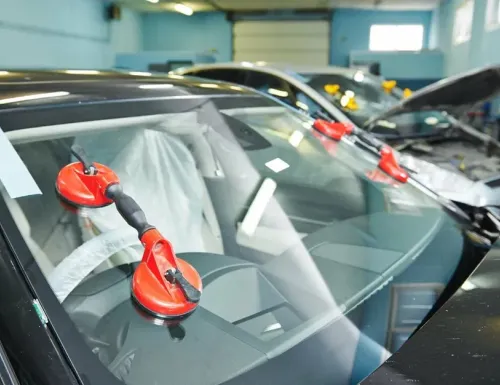
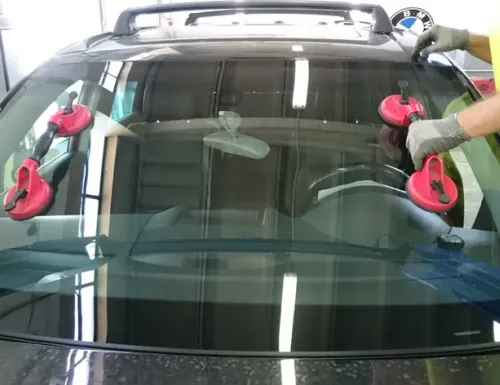
For replacements: trim removal, glass extraction, bonding surface prep with the correct primer, new pane installed with high-modulus urethane, adhesive cured with IR lamps. Drive-away time is typically 60 to 90 minutes after installation. Static camera calibration is completed in-shop. Dynamic calibration happens as you drive.
We handle insurance coordination with all major carriers. Your deductible is typically the only out-of-pocket cost. See our insurance claim guide if you are weighing whether to file.
Questions we hear often
Does mobile service work for Tesla windshields?
For Model 3 and Model Y, yes. We run mobile service across Metro Atlanta and bring calibration equipment with us. Model X and Cybertruck are better handled in-shop because of glass size and handling requirements.
How long does Autopilot stay restricted after replacement?
Dynamic calibration typically resolves within 25 to 50 miles of driving. The system shows a prompt when complete. Some vehicles take more mileage than that.
Can a chip be repaired or does it need replacement?
Location determines the answer more than size does. Chips in the forward camera zone need replacement. Chips under one inch, away from the camera zone and glass edge, are good candidates for resin repair. Our technicians assess both factors before making a recommendation.
What if Autopilot does not calibrate after replacement?
Bring it back to us. Calibration failure after a windshield job usually points to a camera mount issue or a glass spec issue we can diagnose and address.
Our shop at 510 Glen Iris Dr NE is AGSC-certified and has operated as Glass Inc in Atlanta since 1956. ADAS windshield calibration is included with every replacement and also available as a standalone service if your calibration has drifted without a glass change.
Call (404) 873-6991, schedule online, or reach us at sales@glassinc.net.