Windshield Replacement in Atlanta at the Glen Iris Shop
Replacing a windshield is not glazing, it is a structural repair, and Midtown Glass Atlanta treats it that way at 510 Glen Iris Dr NE in Old Fourth Ward. Replacement starts at $199 (full price list), and the price moves with the glass your car actually takes rather than with the badge on the hood. We order against your build, cut the old unit out without gouging the pinchweld, prime what needs priming, and set the new glass in one continuous urethane bead. Then you get a real safe drive-away time, typically one to four hours depending on adhesive, temperature and humidity. Cars built from roughly 2016 onward usually carry a forward camera on the glass, and that gets recalibrated here for $150 to $400, on a level floor under controlled light. We are about ten minutes from most intown addresses outside of rush hour, which is why a shop slot generally beats sending a van into a condo deck. Smaller damage may still take a resin repair instead. Open Monday to Friday, 8am to 5pm. Call (404) 873-6991 or start with the instant quote.
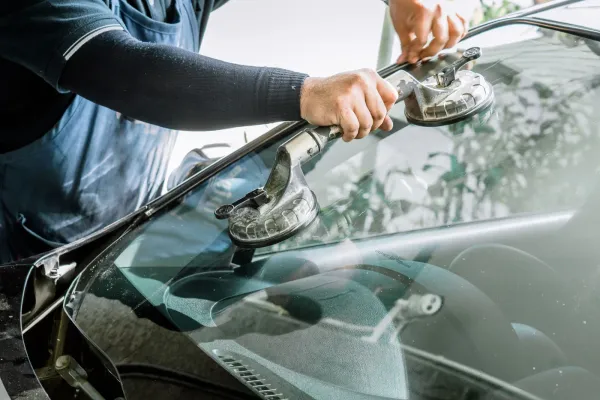
The windshield is holding up the roof, so the bond is the job
People think of a windshield as the biggest window on the car. It is closer to a bonded panel. In a front-end hit the glass is the surface the passenger airbag pushes against as it inflates, and in a rollover the bonded windshield helps the roof resist crush. Both of those depend on the urethane, not on the glass itself, which is why a fast, careless install leaves a car that looks finished and is quietly worse than it was.
So the work runs in a fixed order. We identify the exact build before anything is ordered, because two cars of the same model year take different parts once you count an acoustic interlayer, a rain sensor, a heated wiper park, a head-up display wedge or a solar coating. We protect the hood, dash and trim. The old glass comes out with a wire or a cold knife, cut close enough that the pinchweld stays clean. The old urethane is trimmed to a thin, even bed rather than scraped to bare metal, since that cured layer is the best bonding surface on the car, and anything exposed gets primed so corrosion never starts under the new bond. The new glass is set on the correct stand-off height in one continuous bead.
All replacement glass meets FMVSS 205. OEM comes from the automaker's original supplier and matches the factory piece down to the brackets and the shade band. OEE is built to the same federal standard by a different maker for less money, usually with small cosmetic differences. We will tell you which one your car needs and which one it merely could have. Insurance is read before the work starts and billed direct.
Read the damage before ordering anything
A crack past six inches, damage running to the edge where the glass carries load, a break sitting in the driver's line of sight, damage over the camera, or a chip that has gone through both laminate layers all point to replacement. Smaller, better placed damage may still take resin, and we would rather send you out with a $49 repair and your factory glass than sell you a windshield you did not need. A tech reads it under good light and tells you which one you are looking at.
Glass matched to the exact build
Trim level decides more than model year does. An acoustic interlayer changes how the cabin sounds at highway speed, a heated wiper park keeps ice off the blades on the freezing mornings Atlanta does get, a rain sensor and a camera bracket have to land in exactly the right place, and a head-up display needs a wedge in the laminate or the projection ghosts. We order to the build, along with the moldings and clips so the trim goes back the way it came off.
Pinchweld prep, primer, one continuous bead
This is where installs are won or lost. Cut the old glass out too aggressively and you scar the pinchweld, and rust starts under the next windshield. Skip primer on exposed metal and the bond has a weak spot you cannot see. Break the bead and you have a leak path and a wind whistle. We trim the old urethane to a clean bed, prime what the metal and the new glass call for, and lay one unbroken bead of high-modulus urethane at the right height before the glass goes down.
A real drive-away time, and the camera reset
Before you leave we check the reveal gaps, confirm the moldings are seated, and water test the seal. Safe drive-away time typically runs one to four hours depending on the adhesive, the temperature and the humidity, and you get the number for that day rather than a generic one. If the car has a forward camera, it is recalibrated and confirmed here, static against targets or dynamic on a road drive, before the keys come back.
Matching glass to the car, not to the model name
Same model, different windshield
The part number lives in the options, not the nameplate. Before we order, we pin down which of these your car has, because each one changes the glass:
- Acoustic interlayer, a laminated sound layer that keeps the cabin quieter on the Downtown Connector
- Rain and light sensors, which need the right gel pad and bracket to read correctly
- Heated wiper park, the strip that frees the blades on the handful of hard freeze mornings Atlanta gets
- Head-up display, which needs a wedge in the laminate or the projected image doubles
- Solar or infrared coating, which changes how the cabin heats through a July afternoon
- Camera bracket position and frit band shape, which have to match or the calibration will not hold
OEM comes from the automaker's original supplier. OEE is made to the same federal standard, FMVSS 205, by a different manufacturer, usually for less. For a head-up display, an unusually particular camera or a lease you have to hand back clean, OEM is the safer call. For most intown commuters, quality OEE performs the same and costs less. We quote both and say which one we would put on our own car. Call (404) 873-6991.
Why the shop usually beats a van in a deck
Ten minutes from most intown addresses, and a level floor
Mobile replacement is real and we do it. It is also the slower option for most people who live or work inside the perimeter, and it is worth knowing why before you book it.
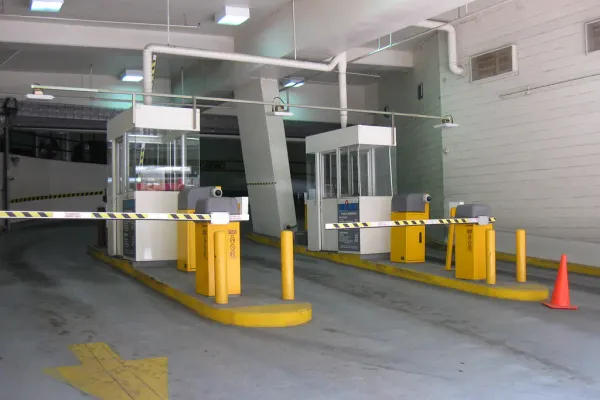
A high-rise or condo deck is a constrained workspace. Clearance on the lower levels is often too low to lift a windshield cleanly, ramps and columns leave no room to walk a piece of glass around the car, buildings have rules about solvents, and the level is usually half open to the weather, so the same adhesive cures on a different clock in February than it does in August. Add event traffic, a night at Mercedes-Benz Stadium, a game at State Farm Arena, a convention letting out of the Georgia World Congress Center, a festival crowd filling Piedmont Park, and a van's arrival window stops meaning much.
The bay at 510 Glen Iris Dr NE has none of those problems, and the camera calibration afterward needs the level floor and controlled light that only exist here. From Midtown, Downtown, Inman Park, Poncey-Highland or Virginia-Highland you are usually about ten minutes out. Drop the car, walk the Eastside BeltLine Trail or Historic Fourth Ward Park, come back to finished glass. Book at (404) 873-6991.
What actually happens to your car in the bay
Start to drive-away, in order
- Confirm the exact build and the part, then protect the hood, dash and trim
- Remove the cowl, wipers and moldings, and disconnect anything that runs through the glass
- Cut the old windshield free with a wire or cold knife, staying off the pinchweld
- Trim the cured urethane to a thin, even bed and prime any exposed metal
- Dry set the new glass to check alignment, then lay one continuous bead
- Set the glass at the correct stand-off height and reassemble the trim
- Water test for leaks, confirm the reveal gaps, and start the cure clock
- Recalibrate the forward camera, static or dynamic by make, and confirm it passed
The number that decides when you can drive is safe drive-away time, the window the urethane needs before the bond can carry a crash load. That typically runs one to four hours depending on the adhesive, the temperature and the humidity, and we use fast-cure adhesive when conditions allow. Same-day work is normal on common vehicles when the glass is already on hand, and we say honestly when it is not. Call (404) 873-6991.
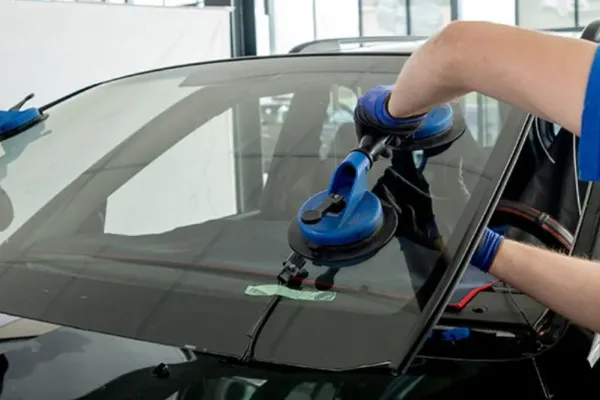
Replacement questions, answered straight
What decides the price of a windshield?
The glass, mostly. Replacement starts at $199 for a plain windshield, and the number climbs as the options stack up: an acoustic interlayer, a rain or light sensor, a heated wiper park, a solar coating, a head-up display wedge. If a forward camera rides behind the glass, recalibration adds $150 to $400. We price against your specific build rather than a model average, so the quote you get is the number you pay. Call (404) 873-6991.
OEM or OEE, which one does my car need?
OEM comes from the automaker's original supplier and is an exact match in thickness, shade band, brackets and logo. OEE is made to the same federal standard, FMVSS 205, by a different manufacturer, usually for less money and with minor cosmetic differences. A head-up display, a camera that has been particular in the past, or a lease you have to return clean are the cases where OEM earns the difference. Most intown commuters do fine on quality OEE.
What is safe drive-away time and why do I have to wait?
It is the window the urethane needs to reach enough strength to hold the windshield in a crash. Leave before it, and you are driving a car whose airbag backstop and roof support are not yet bonded. Depending on the adhesive, the temperature and the humidity it typically runs one to four hours. We use fast-cure adhesive when conditions allow, and your installer gives you the exact time for that day instead of a stock answer.
Does my car need camera recalibration after new glass?
If it has lane keeping, automatic emergency braking, adaptive cruise or lane departure warning, almost certainly. The camera aims through the windshield, so moving the glass moves the aim. Most vehicles built from roughly 2016 onward have one. Calibration is static against printed targets, dynamic on a road drive, or both by make, and it runs $150 to $400. We do it here, where the floor is level and the lighting is controlled.
Why do you steer people to the shop instead of mobile?
Because for anyone already intown the shop is usually the faster half of the day and the better install. A condo deck brings low clearance, tight ramps, no room to walk a windshield around the car, building rules about solvents, and outdoor temperatures that change how the adhesive cures. Calibration needs a level floor and controlled light. We still run mobile replacement where it makes sense, and we tell you at booking which one your car wants.
What happens to the pinchweld when the old glass comes out?
It should come through untouched, which is the whole trick. We cut close to the glass so the blade never digs into the painted flange, then trim the old urethane down to a thin, even bed instead of scraping to bare metal, because that cured layer bonds better than fresh paint does. Anywhere metal is exposed gets primed. Skip that and rust starts quietly under the new windshield, and the next installer inherits it.
How does insurance work on a replacement?
Georgia has no law that waives your glass deductible. Some comprehensive policies waive it on chip repair, and a few carriers sell optional full glass coverage as a rider. We read your policy before we touch the car and tell you what you will actually owe, then bill State Farm, GEICO, Progressive, Allstate, Liberty Mutual or USAA directly. A comprehensive glass claim is generally handled as no-fault. Cash pricing is straightforward if you would rather skip the claim. The Georgia windshield insurance guide walks through the claim-or-cash decision.
Can you do it the same day I call?
Often, when the glass for your build is already on hand and there is a bay open. Common vehicles are the easy case. A head-up display windshield, an unusual acoustic piece or a European build may need a day or two to land the right part. Booking earlier in the day helps, and it helps more on a convention or event day when everything downtown slows down. Call (404) 873-6991 and we will tell you straight.
Damage Assessment
4 questions · instant result
What type of damage do you see?
Windshield replacement from $199, done to the standard the bond has to meet
Glass matched to your exact build, the pinchweld kept clean, one continuous urethane bead, a real safe drive-away time, and the forward camera recalibrated on a level floor. Drop the car at 510 Glen Iris Dr NE and walk the BeltLine while we work. Monday to Friday, 8am to 5pm.