ADAS Windshield Camera Calibration in Atlanta, on a Level Shop Floor
Behind the mirror on most cars built from roughly 2016 on sits a forward-facing camera. It reads the lane lines, the car ahead and the shape of what is in front of you, and that picture drives automatic braking, lane centering, camera-based cruise and speed-sign reading. Pull the glass for a windshield replacement and the camera's aim moves with it. A fraction of a degree at the bracket becomes a wide miss by the time the view reaches the car ahead, and nothing on the dash tells you it happened. Calibration puts the aim back where the carmaker specified and proves it on the scan tool. We run it at 510 Glen Iris Dr NE in Old Fourth Ward, on a level floor with measured targets and controlled light, because a driveway or a condo deck cannot give a camera the geometry it needs. Calibration runs $150 to $400, set by the car and the procedure its maker calls for, and booking the glass and the calibration into one visit is the short version of the day. Call (404) 873-6991.
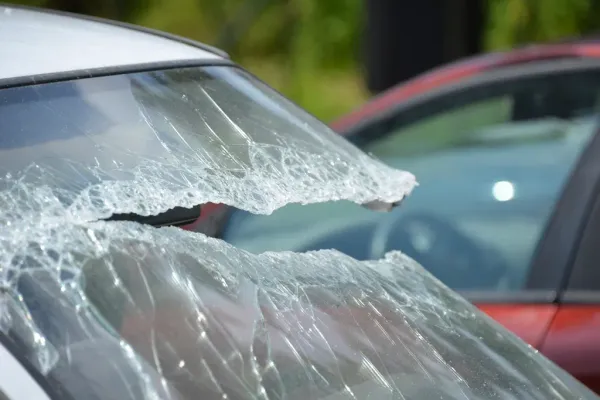
Why new glass means the camera has to be re-aimed
The camera does not measure the world the way a radar does. It works from geometry: where the horizon sits inside its frame, where the vehicle centerline is, how a lane line travels across the image as the car moves. All of that is computed from a known mounting position. A replacement windshield seats a fraction differently than the pane it replaced, the bracket lands on a fresh frit band, and the new glass carries its own slight curvature and thickness inside the allowed tolerance. The camera knows none of this. It carries on doing the same arithmetic from the old assumptions, and the answers drift. Calibration gives it a fresh reference and confirms on the scan tool that it locked on. Skip it and the car can leave with lane keeping and automatic emergency braking aimed at something other than the road you are driving, with no warning light to tell you so.
Static calibration on a level floor
Static work happens indoors with the car stationary. Target boards are squared to the vehicle centerline and set at the distances the manufacturer's service data specifies, measured rather than estimated, and the lighting has to be even and free of glare. The floor cannot slope. The scan tool then walks the camera onto the pattern and reports when it holds a lock. Half an hour to an hour is typical once the adhesive has begun to cure.
Dynamic calibration out on the road
Some systems only finish while the car is moving: a manufacturer-specified speed, road with clean lane paint, held long enough for the software to settle. A technician drives it with the scan tool live and watches for the completed status. This is the part that is genuinely harder inside the perimeter, so we plan the route and the time of day rather than set off and hope.
Static, dynamic, or both
The carmaker decides which path applies, and it can differ between two cars wearing the same badge in the same model year, depending on the option package. Some want static only, some dynamic only, some want static first to get the camera close and then a road drive to finish. We look up the procedure against your VIN before we quote, so the price and the time you hear at booking is the one you get. Every fixed price we charge sits on one price list.
A written result you keep
Every calibration leaves with a report showing the scan before the work, the procedure that was run, and the scan afterwards with no stored fault codes. That paperwork matters to an insurer settling the claim and to a buyer down the line.
What the camera is doing, and what a fraction of a degree costs
One camera feeds most of the safety systems
Advanced driver assistance systems is the umbrella term for the safety tech that now ships on most new cars: collision warning and automatic braking, lane departure alerts and lane centering, radar or camera cruise, speed-sign reading and pedestrian detection. On the large majority of vehicles all of it hangs off one forward camera, mounted to the windshield or to a bracket bonded to it, usually tucked behind the mirror inside the black frit band at the top of the glass.
That camera has no independent sense of where it is pointing. Its aim is a stored value, established when the car was built and re-established whenever the glass is disturbed. Small angular errors turn into large errors at distance. A camera sitting a fraction high reads the horizon in the wrong place and misjudges the gap to the car ahead. One rotated slightly off the centerline puts the lane lines where they are not. The failure worth worrying about is not a dead system with a warning light. It is a system that still runs, still shows its icons, and is quietly working from the wrong picture of the road.
Which cars need calibration after a windshield swap
Built from roughly 2016 on? Assume yes
The working rule: if the car was built from roughly 2016 on and anything on it brakes, steers, warns or reads signs using a camera at the top of the glass, it needs calibration once the windshield comes out. That holds whether or not the camera looked disturbed during the install, and it holds on a flawless replacement, because the reference moved even if nothing was touched. Several premium lines have called for it since well before 2016.
The quickest way to know is to give us the year, make, model and trim when you call, or the VIN if it is in front of you. We look up the manufacturer's procedure rather than guess from the badge, because two cars of the same model year can want different things depending on the options fitted. Call (404) 873-6991 and we will tell you what your car needs and what it costs before you commit to a slot.
Static vs dynamic calibration, side by side
The carmaker picks the method, not the shop
Both methods end the same way: the scan tool confirms the camera has locked onto its reference and no fault codes are stored. What differs is where the work happens and what it needs.
| Static calibration | Dynamic calibration | |
|---|---|---|
| Where it happens | Indoors at the shop, car stationary | On the road, technician driving with the scan tool live |
| What it needs | A level floor, target boards at measured distances from the vehicle centerline, even light without glare | A steady speed the manufacturer specifies, lane paint the camera can read, uninterrupted minutes |
| Typical time | Half an hour to an hour once the adhesive has begun to cure | As long as the software takes to settle, which runs longer when intown traffic breaks the speed |
| Can it happen at your address? | No, the floor and targets are at 510 Glen Iris Dr NE | It starts and ends at the shop, after any static step the car calls for |
| Who decides it applies | The manufacturer's procedure for your VIN | The same procedure; some cars want static first, then the drive |
Either way it is part of the $150 to $400 calibration price, and we tell you which one your car needs before you book.
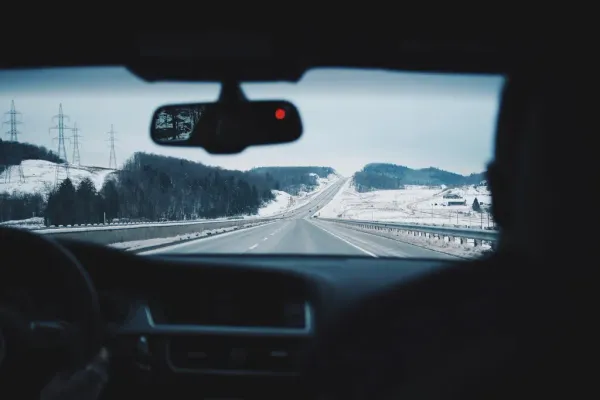
Why a dynamic calibration drive is hard inside the perimeter
Steady speed, clean paint, uninterrupted minutes
A dynamic calibration needs three things at the same time: a steady speed the manufacturer specifies, lane markings the camera can lock onto, and enough uninterrupted minutes for the software to settle. Intown Atlanta is stingy with all three, which is the honest reason this work is easier for a suburban shop than for one sitting at Glen Iris.
Speed is the first problem. The Downtown Connector rarely holds a steady cruise through the middle of a working day, and the surface streets around Midtown and Old Fourth Ward are a chain of lights, stop signs and BeltLine crossings full of people. Drop below the specified speed and the routine stalls or aborts and you start again.
Lane paint is the second. Long stretches of Ponce de Leon Ave, North Ave, Boulevard and the wider intown grid carry faded or patched striping. Construction on and around the BeltLine keeps shifting lanes behind cones, where temporary striping and the old striping are both visible at once. A camera being taught what a lane looks like does not want two answers.
So we plan the drive instead of improvising it. We know which stretches near the shop hold clean paint and let a car sit at a steady speed, and we pick the hour for it. Where a vehicle wants static first, that half is already finished on the floor at Glen Iris before the car goes out, which shortens the drive considerably. And if traffic will not cooperate that afternoon, we keep the car until the calibration completes rather than hand back keys on a partial pass.
ADAS Calibration FAQs
What does ADAS calibration cost?
$150 to $400, set by the vehicle and by which procedure the manufacturer specifies. A static-only job sits at the lower end, a job that wants static followed by a road drive sits higher. Booked alongside a windshield replacement it is one visit rather than two. Call (404) 873-6991 with the year, make and model for a firm number.
How long should I allow?
Static calibration is usually half an hour to an hour once the adhesive has begun to cure. A dynamic pass adds the drive, and inside the perimeter that can take longer than the book time because of traffic and lane closures. Paired with a windshield replacement, plan on most of a morning or most of an afternoon at the shop. We give you a tighter window when you book against your VIN.
Can you calibrate at my house or in my building's deck?
Not the static part. It needs a level floor, target boards at measured distances from the vehicle centerline, and even light without glare. A driveway slopes, a deck has beams, poor light and temperature that changes from level to level, and neither has the clear run of floor in front of the car that the targets need. All camera work happens at Glen Iris. We can replace the glass at your address and finish the calibration here, often the same day.
What happens if the calibration is skipped?
The car drives away with safety systems that are still switched on and still working from an aim that no longer matches the road. Lane keeping can pull toward a line instead of away from it. Automatic emergency braking can read the distance to the car ahead wrong, and brake late, or brake for something that is not there. Adaptive cruise can hold a following gap that is not the gap you set. None of it announces itself, which is exactly what makes it worth doing.
Will my insurance pay for the calibration?
Many comprehensive policies treat calibration as part of the glass claim, though it varies by carrier and by plan. We bill State Farm, GEICO, Progressive, Allstate, Liberty Mutual and USAA directly, and we read your policy before we start so you know what you will actually owe rather than finding out afterwards. Call (404) 873-6991 and we will look it up together.
Do electric cars need anything different?
The glass work is the same and the camera behind it works the same way. What differs is the procedure the manufacturer publishes, and on some EVs the calibration is driven entirely through the vehicle's own software rather than a generic tool. We check the procedure against the VIN before you book and tell you plainly whether it is one we can complete here or one better handled by the dealer. We would rather say so up front than start a job we cannot finish.
Get the camera aimed before you drive on it
If the windshield came out, the forward camera needs to be re-aimed and proved on a scan tool. We do that on a level floor with measured targets at 510 Glen Iris Dr NE, Monday to Friday, 8am to 5pm, for $150 to $400 depending on the vehicle. Give us the VIN and we will tell you which procedure your car needs before you book.