A cracked or chipped windshield does more than obstruct your view. Your windshield contributes to the structural rigidity of your vehicle, backs up the passenger airbag during a collision, and houses the forward-facing camera that powers most modern safety systems. When the glass is compromised, those systems are compromised along with it.
At Midtown Glass Atlanta, we have been replacing windshields for Atlanta drivers since 1956. Here is what to expect from the process, when replacement is actually necessary, and what makes a quality installation different from a careless one.
When repair is enough — and when it is not
Not every damaged windshield requires replacement. The size and location of the damage determines which option is appropriate:
Usually repairable:
- Chips smaller than a quarter
- Single cracks shorter than six inches
- Damage not in the driver’s direct line of sight and not reaching the windshield edge
Requires replacement:
- Cracks longer than six inches, or any crack that runs to the windshield edge
- Damage in the driver’s direct sightline
- Multiple chips or cracks across the glass
- Any damage to the inner glass layer
If you are not sure which applies, bring it to our shop at 510 Glen Iris Dr NE in Midtown, or call (404) 873-6991. We look at the damage and give you a straight answer before any decision is made.
Signs that immediate replacement is needed
A few situations call for same-day action rather than waiting:
- The crack has reached the windshield edge, which weakens the frame bond
- Visibility is impaired while driving in normal daylight
- Georgia’s summer heat is actively spreading the crack
- Your vehicle has been flagged during an inspection for windshield damage
Atlanta’s heat accelerates crack growth. A chip that could have been repaired in March can become a full edge-to-edge crack by July. Addressing damage early is nearly always less expensive.
The replacement process
Assessment and glass selection
Every replacement starts with confirming your vehicle’s exact specification — not just the shape of the glass, but any technology embedded in it. Rain sensors, heating elements, heads-up display zones, and acoustic interlayers all affect which glass goes in your car. Using a spec that does not match your vehicle can cause sensor malfunctions, wind noise, and water leaks after installation.
We also confirm whether your vehicle has a forward-facing ADAS camera. That determines what happens at the end of the job.
Removing the old windshield
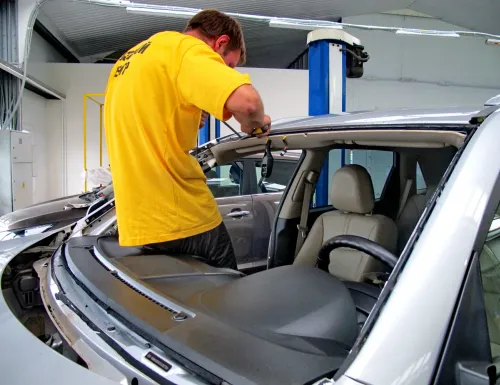
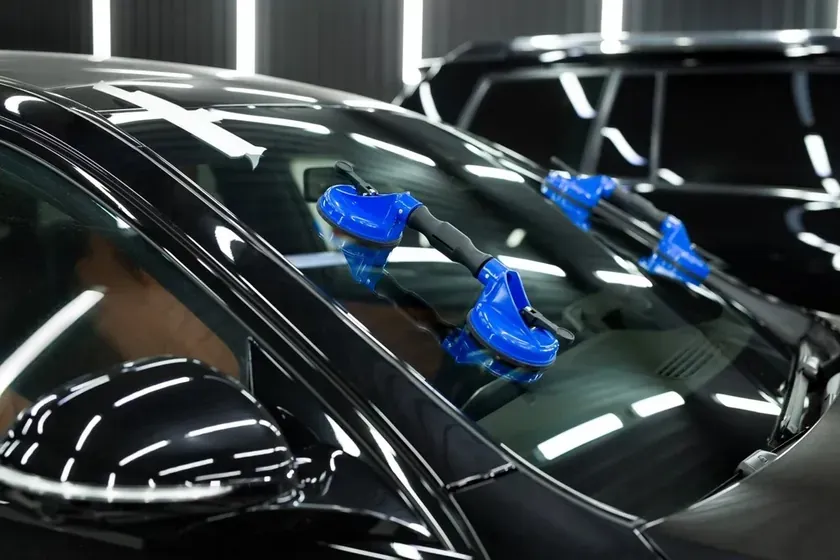
A cold knife cuts through the urethane adhesive that bonds the windshield to the pinch-weld frame. Suction cups lift the glass out cleanly without contacting the surrounding paint or trim. Any remaining adhesive is removed from the channel, and the frame is checked for rust or damage that would compromise the new seal.
Installing the new glass
A primer is applied to the cleaned frame surface, followed by a bead of high-grade urethane adhesive. The new windshield is positioned carefully and pressed firmly into the adhesive bead. Wipers, trim pieces, and sensor housings are reattached. The technician checks for proper alignment across the full perimeter before the adhesive begins to set.
Curing time
The urethane needs time to reach full bonding strength. We recommend waiting at least 60 minutes before driving. Atlanta’s warm conditions generally support faster curing, but there is no reason to rush it. Your technician will tell you the exact drive-away time for your vehicle.
For the first 24 hours after replacement, avoid high-pressure car washes and try not to slam the doors repeatedly. Sudden pressure changes can stress fresh adhesive before it has fully cured.
ADAS calibration
This is the step that separates a professional installation from a rushed one.
If your vehicle has a forward-facing camera mounted to the windshield — common on vehicles from 2016 onward — that camera must be recalibrated to factory specifications after replacement. Even a perfect physical installation changes the camera’s mounting angle by a small amount. Without recalibration, the camera’s reference point is off, and the systems it drives — lane departure warning, automatic emergency braking, adaptive cruise control, forward collision alert — can respond incorrectly or fail to engage at all.
Midtown Glass Atlanta performs both types of calibration in-house:
Static calibration: The vehicle is parked in a controlled environment and a targeting board is placed at a precise distance and angle in front of the camera. The camera’s position is adjusted to match factory specifications. This is the most common type.
Dynamic calibration: The vehicle is driven at specified speeds on marked roads while the system self-calibrates using lane markings and road geometry. Some manufacturers require dynamic calibration after static, or as the primary method.
We use manufacturer-approved equipment and verify system accuracy before the vehicle leaves the shop. We do not send you to the dealer. Every Midtown Glass Atlanta windshield replacement includes calibration at no additional charge when your vehicle requires it.
Why professional installation matters
An improperly installed windshield can fail in ways that are not immediately visible. A weak adhesive bond allows water to enter the cabin, which can damage electronics under the dashboard over time. A windshield installed even a few millimeters out of position can alter passenger airbag deployment angles in a collision. A camera that has not been recalibrated gives safety systems a false reference point that could cause them to brake late or ignore a lane departure.
Midtown Glass Atlanta technicians are certified by the Auto Glass Safety Council (AGSC), which publishes the industry standard for safe auto glass installation. Every replacement is done to that standard.
Atlanta-specific care after replacement
Pollen season: During peak pollen periods, clean your windshield frequently. Running dry wipers over heavy pollen can cause micro-scratches across the glass over time.
Summer heat: Georgia’s summer sun can raise glass surface temperatures well above 140 degrees. Chips and small cracks expand under that heat. Address damage before the summer peak if possible.
Highway debris: I-285, I-75, and I-85 see significant truck traffic carrying gravel and construction material. Maintaining a four-second following distance behind dump trucks and flatbeds dramatically lowers your risk of a rock strike.
After replacement: Keep a window cracked slightly during the first day to prevent pressure buildup in hot conditions, and hold off on high-pressure car washes for 24 hours.
Cost and insurance
Replacement at Midtown Glass Atlanta starts from $199 for standard economy vehicles. Prices run higher for luxury sedans, trucks with ADAS cameras, electric vehicles, and specialty makes. For a full breakdown by vehicle type, see our Atlanta windshield replacement cost guide.
Most comprehensive auto insurance policies cover windshield replacement. You pay your deductible; we handle the paperwork and bill your insurer directly. For information on the claims process and whether filing makes sense for your situation, see our insurance guide for Atlanta drivers.
FAQs about windshield replacement
How long does replacement take?
Most jobs take 60 to 90 minutes for the installation itself. After that, the urethane adhesive needs at least 60 minutes of curing time before the vehicle is safe to drive. We will give you the specific drive-away time for your vehicle.
Can I drive right after replacement?
We recommend waiting at least 60 minutes. Driving too soon can shift the glass before the adhesive bonds fully, which can lead to leaks and wind noise. Your technician will confirm when the vehicle is ready.
Will my insurance cover this?
Most comprehensive auto insurance policies cover windshield replacement. Your out-of-pocket cost is typically your deductible, which ranges from $0 to $500 depending on your policy. Midtown Glass Atlanta works with all major insurers and manages the claims process on your behalf.
Do I need ADAS calibration?
If your vehicle has lane departure warning, automatic emergency braking, or adaptive cruise control — and has a forward-facing camera behind the windshield — yes. Calibration is required after replacement and is included in our service at no additional charge when your vehicle needs it.
Is repair ever better than replacement?
For small chips (under one inch) and short cracks (under six inches, not in the driver’s sightline), repair is usually the right answer. It is faster, less expensive, and often covered by insurance at $0 deductible. We will tell you honestly if repair is an option for your damage.
How quickly can you schedule service?
We offer same-day service for many vehicles depending on glass availability. Call (404) 873-6991 to confirm availability for your make and model.
Do not let a cracked windshield sit longer than necessary. Call Midtown Glass Atlanta at (404) 873-6991 or request a quote online. We are at 510 Glen Iris Dr NE, Atlanta, GA 30308, and our mobile team covers the full Metro Atlanta area.
Schedule your auto glass service.