Windshield pitting is not a single event you can point to. It is the accumulated result of thousands of sand, gravel, and fine debris particles striking your windshield at highway speeds over months and years. Each individual impact is invisible. Together they create a surface that looks clear in shade but scatters light in every direction when the sun sits low on the horizon or oncoming headlights face you at night.
For Atlanta drivers who spend regular time on I-285, I-85, and the Downtown Connector, pitting is practically unavoidable. The question is not whether you will develop it but how severe it has gotten and what to do about it.
What pitting actually looks like on the glass
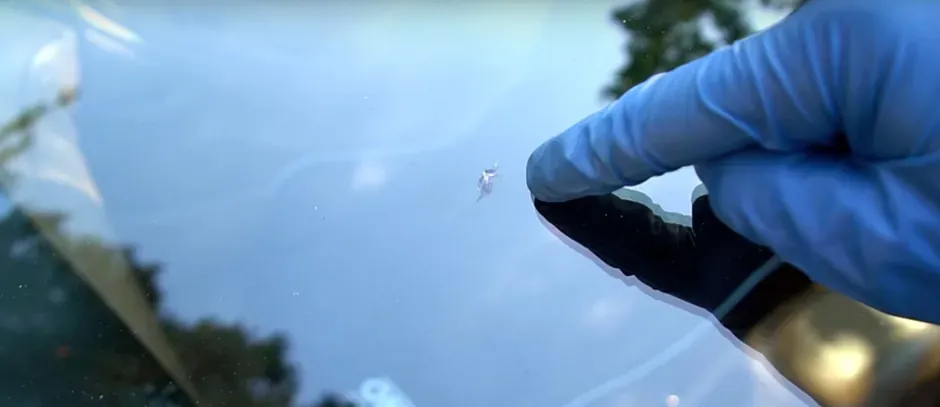
Each pit is a microscopic impact crater in the outer glass layer. Individually, they are invisible to the naked eye. What you notice are the collective effects:
- Starburst patterns around oncoming headlights at night that obscure lane markings and road hazards
- Whiteout effect when driving toward the rising or setting sun
- Hazy or frosted appearance across the windshield surface even after cleaning
- Wiper streaking that was not present before: wiper blades cannot make clean, flat contact with a pitted surface
- Reduced contrast between objects and background, which makes spotting pedestrians and cyclists in difficult lighting harder
Most drivers notice pitting first during a specific commute. For Atlanta, eastbound I-20 toward downtown in the morning rush and westbound I-285 around 6 p.m. are where the sun angle hits worst. If you find yourself squinting or leaning to see around glare during those commutes, pitting is the likely cause.
Why Atlanta roads accelerate pitting
The construction profile of Metro Atlanta’s highway network makes pitting develop faster here than in many comparable cities.
The I-285 perimeter, particularly the western and southern sections between I-20 and I-75, has been under active construction for years. Road work exposes base aggregate and creates surface irregularities that kick up sand and stone at highway speeds. Vehicles at normal following distances drive through a continuous debris field.
Trucks carrying aggregate from quarries in Cherokee, Forsyth, and Pickens counties to metro construction sites run the I-75 corridor and feed into I-285 and I-85 daily. Gravel, concrete mix, and crushed stone shed from these trucks even when tarped. Drivers following them receive debris impacts continuously.
Georgia’s pine pollen season adds a seasonal component. Pollen granules that accumulate on glass surfaces through March, April, and early May get dragged across the windshield by wiper blades. Pine pollen grains have a textured, slightly abrasive outer coat. Over multiple springs, pollen drag contributes to surface erosion beyond what road debris alone creates.
Georgia’s red clay dust, airborne during dry periods, adds fine particle abrasion at lower speeds on surface streets and rural roads.
Assessing how severe your pitting is
Before deciding what to do, you need an honest assessment of severity. Test your windshield in two specific conditions:
The setting sun test: At golden hour, drive west or toward the low sun. A mildly pitted windshield shows some diffuse brightening at the horizon but does not impair your ability to see clearly. Moderate pitting creates enough scattered light that you can see the haze when looking through it. Severe pitting produces a near-whiteout zone around the sun’s position that makes lane markings difficult to see and forces you to slow down.
The night headlight test: Drive toward oncoming traffic on a dark road with minimal street lighting, if you can do so safely. Mild pitting adds a slight starburst to each headlight. Moderate pitting creates overlapping halos that reduce the contrast between the road and background. Severe pitting makes the entire forward visual field bright and low-contrast when facing headlights.
Most drivers who have lived with the same windshield for years have adapted to the degraded view without realizing how much their visibility has declined. Try this: drive a car with a new or nearly new windshield and then switch back to yours. The difference is often dramatic.
What you can do about it
Professional polishing for mild pitting
Cerium oxide polishing is the primary method for addressing mild pitting. A technician uses a compound of cerium oxide, a fine abrasive used in optical glass finishing, with a rotating buffing pad to remove a thin layer of material from the outer glass surface down to a level below the shallowest pits.
When it works well, polishing produces a meaningfully smoother surface that scatters light less. Glare from headlights and low sun reduces noticeably. Wiper blade contact improves.
The honest limitation: polishing removes glass. You can only remove so much material from an optical surface before the uneven removal creates distortion. For mild pitting, where craters are shallow and not densely packed, polishing produces a real improvement that can last a year or two before the surface is back to the same state through new exposure.
For moderate or severe pitting, polishing removes some material but leaves the deeper craters intact. Drivers often report that the glass looks better in flat light but still shows significant glare in challenging conditions. Polishing moderate-to-severe pitting is a partial and temporary measure.
Polishing costs approximately $75 to $150 and takes 60 to 90 minutes at Midtown Glass Atlanta’s 510 Glen Iris Dr NE shop.
Replacement for moderate to severe pitting
When pitting has reached a level that affects your ability to drive safely in common conditions, replacement is the right decision. The visibility impact of moderate and severe pitting is not minor. Sunrise and sunset commutes, night driving, and rain conditions on a severely pitted windshield are genuinely more hazardous.
A new windshield gives you the optical clarity the glass had when your vehicle was new. For vehicles with ADAS cameras mounted behind the windshield, replacement also restores camera accuracy. Pitting scatters light in ways that affect camera input much as it affects human vision, and drivers with modern safety systems may notice inconsistent ADAS behavior as pitting worsens.
At Midtown Glass Atlanta, windshield replacement for standard passenger vehicles runs $200 to $400. Vehicles with ADAS systems requiring camera recalibration after glass replacement are $300 to $600 depending on the system.
Insurance coverage for pitting
Comprehensive auto insurance policies typically cover windshield replacement when pitting has reached a level that affects driving safety. Georgia does not require zero-deductible glass coverage, so your specific out-of-pocket cost depends on your policy deductible. Our team handles insurance claims directly. Call before scheduling an appointment and we can tell you what your coverage looks like.
Read more about using insurance for windshield replacement.
What slows down pitting
You cannot stop pitting if you drive Atlanta highways. You can slow its progression:
- Increase following distance behind trucks: Stay 4 or more seconds back from dump trucks, flatbeds, and concrete mixers, especially on I-75 and I-85 where aggregate haulers are common. Debris velocity drops rapidly with distance. Even moving from 2-second to 4-second following distance reduces your impact rate substantially.
- Change lanes when passing construction vehicles: Move to the far left lane when the opportunity exists. A single lane of separation reduces direct debris exposure significantly.
- Replace wiper blades every 6 to 12 months: Old blades with degraded rubber collect debris particles along the contact edge and grind them into the glass on every pass. New blades sweep cleanly.
- Apply a hydrophobic glass sealant twice a year: These coatings create a thin sacrificial layer that takes abrasion before the glass does. The coating wears away and can be renewed; the glass underneath is preserved.
- Spray washer fluid before running wipers on a dry windshield: This floats grit off the surface so the wiper is sweeping liquid rather than dragging dry particles across the glass.
- Park in covered areas: Garage parking protects against wind-blown grit, UV degradation, and pollen accumulation between washes.
Frequently asked questions
How long before pitting becomes a real visibility problem in Atlanta?
For drivers who commute daily on I-285 or I-85, noticeable pitting often develops in 3 to 5 years or 50,000 to 70,000 miles. Drivers who use primarily surface streets in neighborhoods like Virginia-Highland, Decatur, or Grant Park may go 6 to 8 years before pitting becomes a visibility issue. Construction zones and regular exposure to aggregate trucks shorten that timeline.
Can I polish the windshield myself at home?
Consumer polishing kits are available, but professional results require controlled rotary equipment and proper pads. Uneven hand pressure during home polishing creates irregular material removal that can introduce distortion. Home kits may reduce glare slightly on very mild pitting; they are not effective on moderate or severe cases and carry the risk of creating new optical problems.
Does my ADAS system actually get affected by pitting?
Yes. Windshield-mounted cameras for adaptive cruise control, lane departure warning, and forward collision systems interpret visual data through the glass. A pitted surface that scatters light degrades camera input in much the same way it degrades human vision. If ADAS features have been behaving inconsistently, pitting may be a contributing factor.
Will a free assessment tell me if I actually need replacement or just polishing?
Yes. Come to our shop at 510 Glen Iris Dr NE for a free pitting assessment. We evaluate the driver’s primary field of vision under proper lighting and tell you honestly whether polishing will give you meaningful improvement or whether the pitting has progressed past where polishing is effective. We do not recommend replacement when polishing is adequate.
Free pitting assessment at Midtown Glass Atlanta.
Call (404) 873-6991 or schedule online. We are at 510 Glen Iris Dr NE, Atlanta, GA 30308. Serving Atlanta drivers with auto glass repair and replacement since Glass Inc opened in 1956. We handle insurance claims directly and offer same-day service on most vehicles.