Atlanta puts windshields through four genuinely different stress patterns across the calendar year. Spring pollen acts as a mild abrasive when wipers drag it across glass. Summer heat-soaks create thermal stress that propagates chips that would otherwise stay stable. Fall brings temperature swings and leaf debris that clog drains and weaken seals. Winter, when it arrives, catches most Atlanta drivers unprepared because it happens rarely but abruptly.
At Midtown Glass Atlanta on Glen Iris Dr NE, we see the same seasonal damage patterns every year. The drivers who call us in January with stress cracks almost always skipped the chip repair they needed in October. The ones who call us in August with spontaneous cracks usually did not use a sunshade all summer. Here is what matters each season and what to actually do about it.
Spring: pine pollen and storm chips (March through May)
Atlanta’s pine pollen season runs from late February through early May. During peak weeks in March and April, pollen counts exceed 3,000 grains per cubic meter on many days, and a car parked overnight anywhere in the metro can look like someone painted it yellow-green.
The risk to your windshield is not pollen sitting on the glass. It is what happens when you run your wipers over it dry. Pine pollen grains are 40 to 80 microns in diameter and have a spiky, textured surface. When a wiper blade drags a thick layer of dry pollen across the glass, those spikes act like fine-grit sandpaper. One wipe does minimal damage. Thirty wipes a day, five days a week, for six weeks of peak pollen season creates micro-scratching that reduces clarity and increases nighttime glare from oncoming headlights.
What prevents pollen damage:
Always hit the washer fluid before activating wipers on a dusty morning. The fluid floats pollen up off the glass surface so the wiper is sweeping liquid rather than grinding particles into the glass. If your washer fluid reservoir is empty, fill it before pollen season starts. Running dry wipers through pollen consistently is one of the faster ways to haze a windshield surface.
Replace your wiper blades each spring. Blades that survived winter have stiffened rubber from cold exposure that does not conform well to the glass curve and tends to collect debris. Fresh spring blades sweep cleanly and do not leave the streaks that make you run wipers more often than needed.
Spring also brings frontal thunderstorms across Metro Atlanta from March through May. High winds can send debris across I-285 and GA-400 with minimal warning. After any significant storm, inspect the windshield from multiple angles in good light. Fresh chips are easy to miss: they are small, the edges have not yet oxidized to gray, and they can be invisible when light hits the glass at a normal angle.
A chip found in spring, when temperatures are mild and urethane repair resin cures evenly, is a straightforward repair. The same chip left through summer heat is harder to repair well and far more likely to have spread into a crack.
Summer: heat-soak, UV, and the AC shock problem (June through September)
Summer in Atlanta is the season most responsible for “spontaneous” windshield cracks. Air temperature is one thing, but what matters for glass damage is surface temperature. A dark or mid-tone colored car parked on an asphalt surface in Midtown or Buckhead in August will have a windshield surface reaching 160 to 180 degrees Fahrenheit during afternoon hours. That glass then gets a direct blast of cold air from the AC the moment the driver starts the car.
This temperature differential across a 4-millimeter windshield creates tensile stress at any existing weakness. A chip that looked stable all spring can spider across the glass in a single afternoon if the AC blast is cold enough and direct enough. This is the mechanism behind a large portion of the “mystery” stress cracks Atlanta drivers ask us about each summer.
What prevents summer heat damage:
Get all chip repairs done before June. Heat accelerates repair resin curing but also makes it harder for resin to flow fully into the damage before it sets. Repairs done in April or May, at 65 to 75 degrees, are more complete and longer-lasting than those done in 90-degree heat.
Use a windshield sunshade when parked outdoors. It will not cool the glass to room temperature, but it can reduce surface temperature by 40 to 50 degrees Fahrenheit by blocking direct solar absorption. That reduction alone can make the difference between a chip that stays stable and one that propagates.
When you start a hot car, run the AC on the lowest fan speed for the first 60 to 90 seconds before directing cold air directly at the windshield. Give the glass surface time to begin cooling before the coldest blast hits it.
The black ceramic frit band around your windshield perimeter deserves attention during summer inspections. That band looks decorative but its function is to protect the urethane adhesive underneath from UV breakdown. Extended Atlanta summers with intense direct UV gradually fade and flake that band. When it degrades, the adhesive it protects weakens and the windshield seal can fail. If the band looks faded or has areas where the ceramic pattern is thin, mention it during your next service visit.
Fall: temperature swings and the cowl drain problem (September through November)
Fall in Atlanta brings some of the best driving weather of the year, but two specific windshield hazards come with it.
The cowl drain issue is the more overlooked one. The cowl is the plastic trough at the base of your windshield where the hood meets the glass. Leaves accumulate there quickly during October and November. Wet leaves blocking the cowl drain channels allow water to back up with no place to go except into the gap between the glass edge and the frame, and eventually into the cabin.
Check the cowl area every week or two during leaf season. Clear it takes two minutes. To test the drain, pour a cup of water into the cowl gap while you watch underneath the front of the car. If it does not run out within 10 seconds, the drain is clogged. A clogged drain left through fall rain season can lead to water intrusion under the dash and behind headliner trim.
The second fall hazard is temperature swing stress. October and November mornings in Atlanta’s northern suburbs, Alpharetta, Cumming, Woodstock, and Roswell, can drop to 35 to 40 degrees while afternoon highs still reach the low 70s. That 30 to 35 degree daily swing is enough to propagate any damage you carried through summer. A chip from a construction zone on I-285 in July that looked fine all summer will start to spread as freeze-thaw cycling begins in fall.
Any outstanding chip repairs should be scheduled before the first consistent overnight freeze. At that point, water can enter the chip and begin the expansion-contraction cycle that turns a $70 repair into a $350 replacement.
Winter: thermal shock and road brine (December through February)
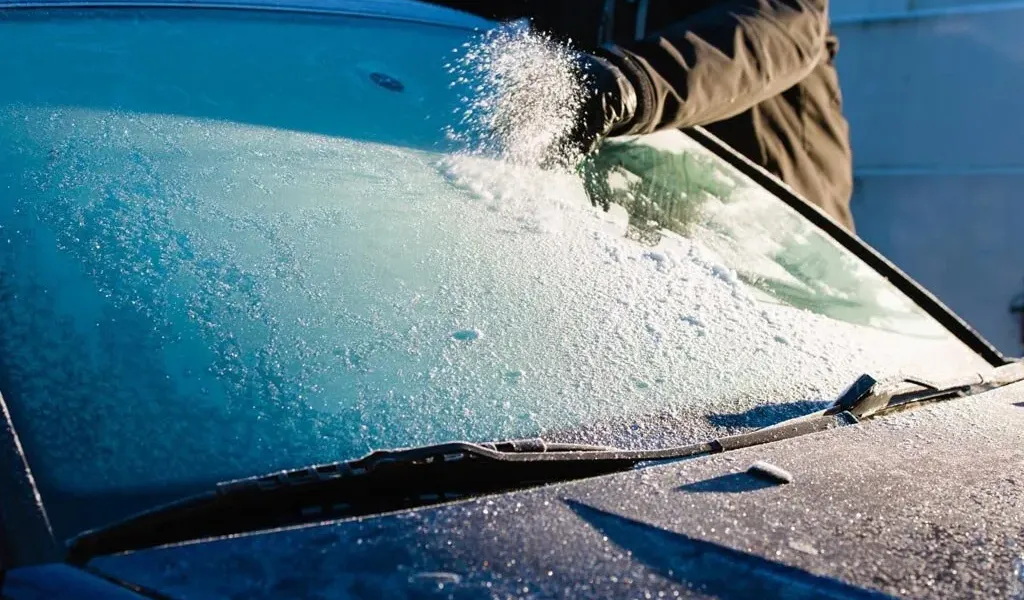
Atlanta averages fewer than 3 days of measurable snow or ice precipitation per year, but frost occurs on 20 to 30 mornings each winter. The relative rarity of hard freezes is what makes them dangerous: most Atlanta drivers do not have a well-practiced deicing routine and tend to reach for whatever is nearby when they find their windshield frozen.
The most common mistake is pouring hot water on the glass. Hot water on a 28-degree windshield creates rapid localized thermal expansion while the surrounding glass stays cold. The differential stress can crack a healthy windshield and will almost certainly crack one with any existing chip or edge stress. A rubbing alcohol spray (two parts 70% isopropyl to one part water) does the job safely without any temperature spike.
The second winter mistake is blasting the defroster at maximum heat immediately. Start on the lowest setting and increase gradually over 2 to 3 minutes. The goal is to raise the glass temperature slowly so the thermal gradient across the 4mm glass thickness stays manageable.
When Atlanta does get ice events, GDOT applies brine solutions to highways. That brine gets sprayed onto your windshield by trucks and SUVs on I-285 and GA-400. Magnesium chloride and calcium chloride, the compounds used in brine, corrode metal components around your windshield: the wiper arm hardware, cowl fasteners, and windshield frame seals. Wash your car within a day or two after any winter road treatment event.
Year-round habits that extend windshield life
Monthly walkaround: Walk around the car once a month and look at the windshield from different angles in good light. Edge chips and stress cracks that start near the frame are most visible when you look at the glass at a shallow angle from outside rather than straight through it from the driver seat.
Washer fluid level: Never let it run dry. An empty reservoir means dry wipers on dusty or pollen-covered glass, which scratches. Georgia’s high pollen density makes this particularly important in spring, but the practice matters year-round.
Interior glass cleaning: Clean the inside of your windshield once a month. Dashboard plastics, leather, and vinyl surfaces off-gas residue that deposits as a hazy film on the interior glass surface. That film gives condensation more to cling to in humid weather and creates glare that night driving makes obvious. Use an ammonia-free auto glass cleaner with a clean microfiber cloth. Household glass cleaners with ammonia degrade rubber seals and window tint over time.
Wiper blade timing: Replace blades in spring and fall. Atlanta’s combination of UV, pollen season, summer heat, and occasional frost ages rubber faster than cooler or drier climates. If blades are streaking, chattering, or leaving unwiped sections, replace them immediately regardless of when you last changed them.
Frequently asked questions
How often should I replace wiper blades in Atlanta?
Every 6 to 12 months. Atlanta’s UV intensity and pollen season are harder on wiper rubber than most climates. If blades are leaving streaks or leaving sections unwiped, replace them. Beam-style (frameless) blades handle Georgia’s heavy rainfall better than traditional bracket-style ones and tend to last longer without collecting debris in the frame.
Can pollen actually scratch my windshield?
Yes, over time. Individual pollen grains are too soft to scratch glass, but when packed densely and dragged across the surface by a wiper blade, the aggregate texture creates micro-abrasion. The damage from one swipe is invisible, but repeated over weeks it creates surface hazing that reduces clarity. Rinsing with washer fluid before wiping prevents this.
Should I repair a chip before fall even if it looks small and stable?
Yes. Small chips that look stable in summer often are under thermal stress. When fall temperature swings begin, that stress can propagate the chip rapidly. A repair in September or October is straightforward. The same chip in January, after freeze-thaw cycling, may have spread enough to require replacement.
Does parking in a garage significantly help?
Yes, across multiple dimensions. A garage eliminates direct UV exposure, reduces thermal cycling from weather swings, protects from storm debris, keeps pollen and leaf accumulation off the glass, and keeps winter surface temperatures above the frost threshold on most Atlanta nights. Of all the protective options available to Atlanta drivers, covered parking has the broadest benefit for windshield longevity.
Questions about seasonal damage? Call Midtown Glass Atlanta at (404) 873-6991 or schedule an appointment. Our shop is at 510 Glen Iris Dr NE, Atlanta, GA 30308. We handle chip repairs, windshield replacement, and seasonal inspections. Glass Inc has been at this location since 1956, and we have seen every version of Atlanta weather damage there is.