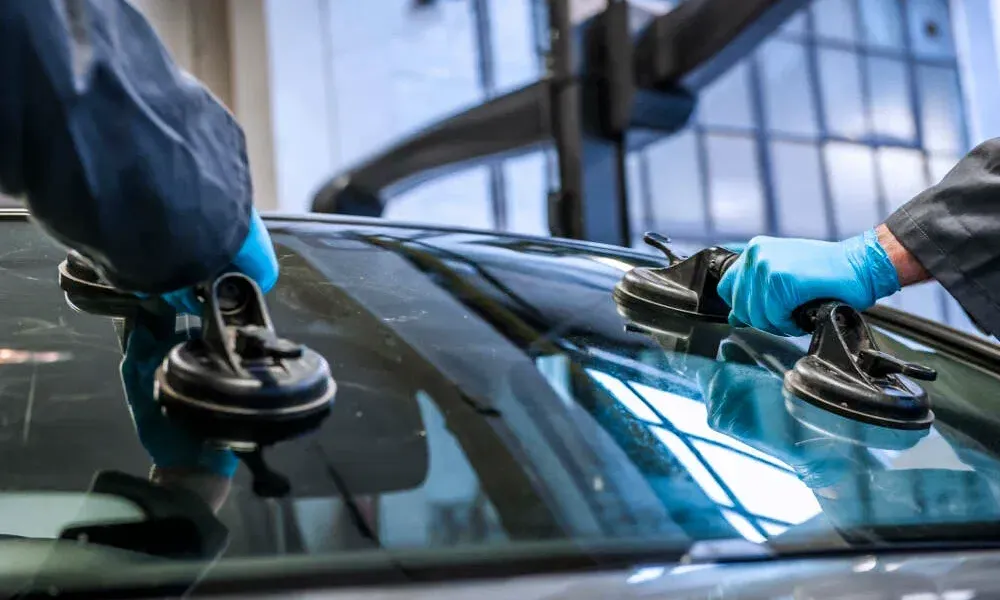
Your windshield replacement is done. The glass is seated, the technician has packed up, and you need to know: can you drive through rain tonight? Can you go through the car wash this weekend? What happens if you slam a door too hard?
These are not anxious questions. They have specific answers based on how urethane adhesive cures, and knowing the timeline keeps you from accidentally compromising a fresh installation.
The short version: light rain during normal driving is fine after the drive-away window. High-pressure water aimed at the windshield edges is not, for at least 24 hours. The car wash should wait a full 24 hours minimum, and 48 hours is better. Here is why, and here is what the first 48 hours should look like in practice.
Why the adhesive matters
A windshield is not mechanically clamped to your car frame. It is bonded with one-part polyurethane adhesive applied in a bead around the pinch weld at the frame opening. That adhesive cures through a chemical reaction triggered by moisture in the surrounding air, not by drying out. As humidity in Georgia air contacts the bead, it initiates crosslinking between polymer chains. The bead goes from paste-consistency to a flexible, rubber-like solid with very high shear strength.
That curing process has two relevant milestones:
Safe drive-away time (SDAT): The point at which the adhesive has enough initial strength to hold the windshield securely during normal driving. In Atlanta summer conditions, 80 to 90 degrees with 65 to 75% relative humidity, this typically happens in 30 to 45 minutes. In winter, when temperatures drop into the 40s, SDAT may take 60 to 90 minutes. Your technician gives you this time based on conditions during your specific installation.
Full cure: The point at which the adhesive has reached its designed structural strength. This takes 24 to 48 hours, depending on temperature and humidity. During this window, the adhesive is still developing strength. It can handle normal driving loads, but aggressive mechanical stress on the fresh seal can affect the final bond quality.
Atlanta’s high humidity is genuinely helpful here. The moisture-activated reaction proceeds faster in humid air than in dry air. Installations done during Georgia summers or after rain events cure faster than the same adhesive would in a dry mountain climate.
Rain exposure after replacement
Rain itself is not a threat to a new installation during normal driving. Water running down the outside of the windshield while you drive creates minimal pressure at the glass edges. The adhesive bead is recessed under the molding and rubber trim. Rainwater does not reach it under normal driving conditions.
What creates risk is directed pressure. A car wash high-pressure jet or a pressure washer wand aimed at the gap between the glass and the molding can force water into the adhesive bead before the cure is complete. Water contamination at that stage can prevent the adhesive from reaching its full bond strength, leaving a permanent weak point that may eventually leak.
Rain timeline after replacement:
- 0 to 1 hours: Avoid exposure if you can. If light rain starts, drive slowly and gently to a covered area.
- 1 to 4 hours: Light rain during normal driving is fine once you have passed the SDAT given by your technician. Avoid heavy downpours.
- 4 to 24 hours: Normal rain and highway driving are acceptable. Avoid driving through standing water or deep puddles, which throws water upward at the underside of the frame.
- After 24 hours: All normal weather conditions are fine.
Car wash timeline
The issue with car washes is pressure, not water volume per se. Even a touchless automatic wash uses high-pressure jets at relatively close range. Those jets can direct water at the windshield edges in a way that rain during driving does not.
| Time after installation | Car wash type |
|---|---|
| 0 to 24 hours | No car washes of any kind |
| 24 to 48 hours | Hand wash only, with low-pressure water away from windshield edges |
| 48 hours to 1 week | Touchless automatic wash acceptable |
| After 1 week | All car wash types safe |
If you need to remove something specific during the first 24 hours, like bird droppings or tree sap, use a damp microfiber cloth and light hand pressure. Do not use a hose or pressure washer.
Leave the retention tape on
After installation, your technician will tape around the windshield molding with retention tape. It looks temporary and some drivers pull it off immediately. Leave it in place.
The tape serves two purposes. It holds the rubber molding in its correct position while the adhesive is soft. If the molding shifts before the adhesive cures, it may not seat correctly, which can lead to water infiltration points later. The tape also applies gentle inward pressure at the glass perimeter that helps the bead form evenly against the pinch weld.
Remove the tape at 24 to 48 hours. Leaving it longer than 48 to 72 hours can cause adhesive residue to remain on the paint when you remove it. Your technician will tell you the specific timing.
Crack your windows when closing doors
For the first 24 hours, leave one window cracked a half inch or so when you park and when closing doors.
When you close a car door on a fully sealed vehicle, the compressed air inside has nowhere to go except outward against the glass surfaces. Each door close creates a brief pressure spike inside the cabin. Under normal circumstances with a fully cured windshield, this is not significant. During the first few hours of cure, when the adhesive bead is still developing its bond, repeated pressure spikes can cause minor movement at the seal.
Cracking a window gives that compressed air a path to escape and eliminates the pressure spike. This is more relevant on newer, tighter-sealing vehicles where you can actually feel the pressure when closing a door on a sealed cabin.
Temperature management during the first 24 hours
Do not blast the defroster on high heat against the new windshield for the first few hours, particularly in winter when the glass is cold. The adhesive curing at the edge zone can be stressed by rapid temperature differentials across the glass.
In summer, if the car has been sitting in the sun and the windshield is very hot, avoid directing cold AC directly at it for the first hour or two. Let the cabin temperature equalize gradually rather than shocking the hot glass with cold air.
Atlanta’s summer heat generally speeds the cure, which is helpful. The one concern specific to Georgia summers is not to overcorrect by creating a large thermal differential across the glass during the first few hours.
Full post-replacement timeline
Drive-away: Follow your technician’s specific guidance. Drive gently to your destination.
Hours 1 to 24: Drive normally but choose smoother roads where options exist. Avoid potholes and rough surfaces. Close doors without slamming. Leave the retention tape on. No car washes. If it rains, drive through it without concern as long as you have passed the SDAT.
Hours 24 to 48: Remove the retention tape. Hand wash only if needed, with low pressure away from the windshield edges. Highway driving is fine. Resume normal door closing.
After 48 hours: Full cure is complete under most Atlanta temperature and humidity conditions. All normal use resumes, including all car wash types.
Warning signs that need attention
Contact your installer if you notice any of the following in the first week:
- Water inside the cabin after rain
- Wind whistle or hissing noise that was not present before
- Any visible gap between the glass and the molding
- Glass that moves slightly when you press on an edge from inside the cabin
These symptoms indicate a seal issue. Quality shops warranty against installation defects. At Midtown Glass Atlanta, every installation carries a 12-month workmanship warranty. If the seal fails or leaks, we correct it at no charge.
Frequently asked questions
Can I go through a touchless car wash 24 hours after replacement?
A touchless wash at 24 hours is acceptable with low risk, provided the nozzles are not positioned to spray directly at the windshield edge gaps at close range. If you want to be conservative, wait 48 hours. Brush-style washes should wait the full 48 hours due to the mechanical force they apply to the glass edges.
What if rain started while the technician was installing the glass?
Professional installations are done under cover. Midtown Glass Atlanta’s 510 Glen Iris Dr NE shop has covered bays. Our mobile technicians carry canopies for outdoor installations. If rain starts before installation is complete, the technician will protect the adhesive bead and either complete under cover or reschedule. Light rain that starts after the glass is seated and the adhesive has been applied does not contaminate a properly applied bead.
My new windshield has more interior fogging than before. Is that normal?
Mild increase in interior fogging is normal for 5 to 7 days after replacement. Urethane adhesive releases small amounts of volatile compounds as it cures, and the new seal geometry may differ slightly from the old worn seal. This resolves on its own. If fogging is heavy, concentrated near the edges, or accompanied by any water inside the cabin, that is not normal. Call us.
Can I use my wiper blades right after replacement?
Yes. The wipers do not stress the windshield seal. Avoid running them on a dry glass surface or leaving them running on a partially dry glass, which creates drag and friction. If the weather is dry, keep them off.
How long until I can use a suction-cup phone mount on the new windshield?
Wait 24 hours before using suction-cup accessories. The pulling force from suction cups is minor, but during the first few hours of cure it can cause movement at the glass perimeter. After 24 hours, all interior accessories are fine.
Questions about an installation at Midtown Glass Atlanta? Call (404) 873-6991 or reach out online. We are at 510 Glen Iris Dr NE, Atlanta, GA 30308, and have been handling windshield replacements in the Atlanta area since Glass Inc was founded in 1956. Every installation comes with a 12-month workmanship warranty and clear aftercare guidance before you drive away.