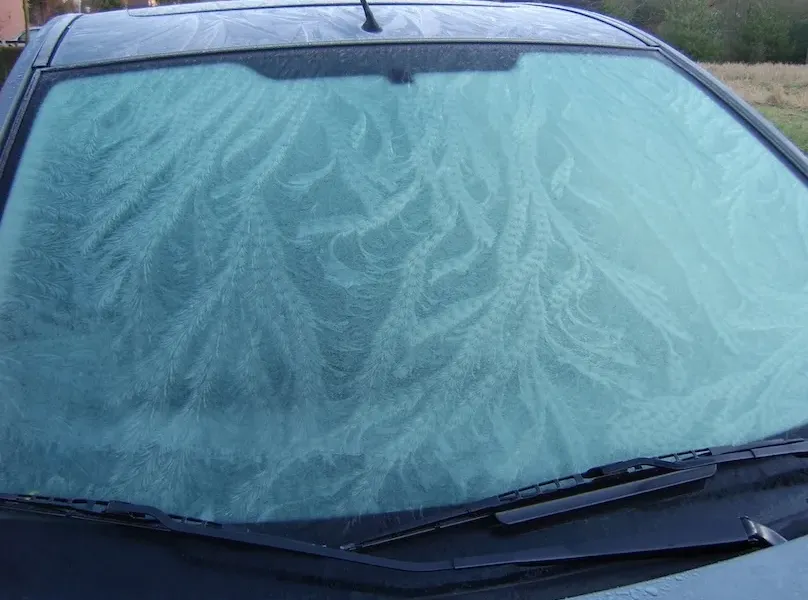
Atlanta may not be Minneapolis, but winter mornings in the metro area regularly fall below freezing from late November through early March. When you walk out to a car glazed in ice at 27 degrees in Grant Park or Buckhead, the temptation is to run inside and grab a kettle of hot water. That approach will very likely crack your windshield.
Glass shatters under thermal shock. A windshield that spent the night at 28 degrees has contracted evenly across its entire surface. Pour hot water on a section of it and the glass in that zone expands rapidly while the surrounding glass stays cold. That stress differential can split a perfectly healthy windshield in under a second. On a windshield with any existing chip, small crack, or edge stress, it will almost certainly crack. We see the results of this at our 510 Glen Iris Dr NE shop every winter.
Here is how to clear ice safely and what to keep in your car during the months when Georgia’s temperatures can swing 35 degrees in a single day.
How Atlanta winters stress windshields
Atlanta’s freeze pattern is different from cities that stay cold for months. Here, overnight lows drop into the upper 20s or low 30s in December through February, then climb back to 55 or 60 degrees by afternoon. That 30-plus-degree daily swing creates thermal cycling that stresses auto glass repeatedly.
Ice that forms inside an existing chip or crack expands as it freezes: water increases in volume by roughly 9 percent when it transitions to ice. That expansion widens a chip slightly each night. The next day it thaws, more moisture seeps in, and the next freeze widens it again. After 5 to 8 cycles, a small chip becomes a spreading crack. A chip repair that might have cost $60 in October becomes a $300-plus windshield replacement by January.
Mornings with ice or frost happen 20 to 30 times per winter in Atlanta, even though measurable snow or ice precipitation is rare. The windshield freezes before the pavement does because glass has no insulation under it. The result is ice on your car when the street looks clear.
The right tools to keep in your car
Put these in your car from November through March:
- Plastic ice scraper with a wide T-bar blade - the wide blade clears Atlanta’s typically thin ice in fewer strokes
- Small spray bottle filled with deicing solution (recipe below)
- Microfiber cloth for final moisture removal before it refreezes
- Snow brush if you park under trees where wet leaves freeze onto the glass
Never use metal tools on glass. A spatula, putty knife, or metal ice scraper edge leaves gouges and scratches that create permanent glare arcs at night. A credit card works in a pinch but has no blade width and takes four times as long.
Rubbing alcohol spray: the fast and cheap method
Mix two parts isopropyl alcohol (70% concentration, the standard pharmacy bottle) with one part water in a spray bottle. Keep it in the center console or door pocket.
The science behind it: isopropyl alcohol has a freezing point around -89 degrees Celsius. When it contacts ice, it disrupts the hydrogen bonds holding water molecules in their crystalline structure, pulling the freezing point well below the ambient temperature. The ice softens and releases from the glass without any temperature spike that would stress the glass.
Steps:
- Spray the solution across iced areas and wait 30 to 45 seconds.
- Use the plastic scraper to push loosened ice off in wide strokes from top to bottom.
- Wipe residual moisture with the microfiber cloth before it has a chance to refreeze.
On a typical Atlanta frost morning, total time is 3 to 4 minutes. On heavier ice from one of Atlanta’s occasional winter storms, apply twice or follow up with a commercial deicer.
Commercial deicers
Methanol-based spray deicers sold at AutoZone, O’Reilly, and most gas stations work quickly on heavier ice. Methanol has a lower freezing point than isopropyl alcohol and penetrates thicker ice faster.
Avoid any product that contains salt or abrasive particles. Road salt is designed for pavement. On auto glass, it leaves mineral deposits that bond to the surface and accelerates corrosion on wiper arms, cowl panels, and the seals around your windshield frame.
Using your defroster without cracking the glass
The defroster is useful only if you use it gradually. Start the car and set the defroster to the lowest heat setting. Let the glass temperature rise slowly over 2 to 3 minutes before increasing the heat setting.
Jumping straight to maximum defrost on a frozen windshield creates the same physics as hot water, just less severe. The inner glass surface heats quickly while the outer surface remains cold. That differential is enough to propagate any existing edge stress or chip.
A good combination approach: spray alcohol solution across the windshield while the defroster warms up on low. By the time you have finished scraping, the defroster has cleared interior frost. Total time is 4 to 5 minutes even on fully iced windshields.
Check that your rear window defroster works too. A rear window that cannot heat from inside is more vulnerable to thermal shock cracking because it has no secondary defrost method.
Wiper blade precaution
Never try to force frozen wiper blades to operate. If the blades are frozen to the glass, running the wiper motor can tear the rubber off the blade frame or burn out the motor entirely. Lift each blade by hand first, shake off any ice, and verify they move freely before turning on the wipers. If blades are frozen solid at the contact surface, spray a little alcohol solution around the contact edge and wait 20 seconds.
Preventing ice formation in the first place
Prevention is faster than any scraping method:
- Windshield cover or a large beach towel: lay it across the windshield the night before a forecast freeze. Peel it off in the morning. Magnetic-edge covers stay in place better than fabric ones on windy nights.
- Park facing east: the morning sun hits east-facing windshields first, providing natural defrost assist that can shorten your scraping time by 10 minutes.
- Park in a garage: even an unheated garage keeps windshield surface temperatures a few degrees above outdoor ambient, which is often the difference between frost and bare glass on Atlanta’s borderline nights.
- Hydrophobic glass treatment: Rain-X and similar products slow ice adhesion. The ice that does form comes off more easily and in thinner sheets.
- Replace wiper blades before winter: stiffened rubber from UV exposure does not make good contact with the glass and leaves ice residue.
What existing chips do during a Georgia winter
A chip or small crack in your windshield before winter arrives is a real liability. The freeze-thaw cycle described above can turn a chip that looked stable through summer into a spreading crack after just a few cold nights. Even Atlanta’s mild winters, with freezes that come and go, create enough cycling to propagate damage that would otherwise be stable in a warmer climate.
If you find any chip or crack before the first freeze, schedule a repair. Windshield chip repairs take 20 to 30 minutes, and many Georgia comprehensive insurance policies cover chip repairs with zero out-of-pocket cost. The repair cost compared to what ice damage can do to that chip over a single winter is not a close comparison.
Frequently asked questions
Can I use salt water as a quick deicer?
No. Saltwater corrodes the metal components around your windshield: wiper arms, the cowl panel, and the pinch weld that bonds the glass to the frame. It also leaves mineral deposits that are difficult to remove without scratching the glass surface. Use isopropyl alcohol or a commercial methanol deicer.
My ice scraper blade has a chip in the edge. Does that matter?
Yes. A damaged blade edge can gouge the glass, leaving permanent scratches that create glare at night. Replace scrapers if the blade has chips, rough spots, or cracks. They cost $5 to $8 at any auto parts store.
How do I keep washer fluid from freezing in the reservoir?
Switch to a winter-formula washer fluid rated to at least -20 degrees Fahrenheit before the first hard freeze. Do not dilute it with water, which raises the freeze point and can crack the plastic reservoir. Most Atlanta auto parts stores stock winter formula from October through February.
What do I do if thick ice has formed from an actual ice storm?
Atlanta’s occasional severe winter ice events can leave a quarter inch or more of ice on vehicle surfaces. Commercial methanol deicer applied twice, combined with a gradually warming defroster and a plastic scraper, will clear it. Do not force ice off large sections at once. Work from the top down and let the deicer do the loosening before you scrape.
Will deicing spray damage aftermarket window tint?
Standard isopropyl alcohol and methanol deicers are safe for factory-tinted glass. If you have aftermarket tint film on side windows, check the manufacturer’s instructions before applying any solvent to those windows. Windshields do not typically have aftermarket tint film applied to them.
Winter damage? Get a free inspection at Midtown Glass Atlanta.
Call us at (404) 873-6991
Midtown Glass Atlanta is at 510 Glen Iris Dr NE, Atlanta, GA 30308. We have been handling Atlanta windshield repairs since Glass Inc opened in 1956. Mobile service is available across the metro for drivers who cannot make it to the shop. Many chip repairs cost nothing out of pocket under Georgia comprehensive coverage.