A tree branch shatters your windshield during an Atlanta thunderstorm. A dump truck on I-285 sends a rock into the center of the glass. Either way, same-day windshield replacement is a real option — not a theoretical service tier — and you want to understand what actually happens between the call and the drive-away.
Here is the full mechanical picture: what the adhesive chemistry means for your waiting time, why inventory depth is what makes same-day possible, how ADAS calibration fits into the same-day workflow, and what separates a proper installation from a compromised one.
Why same-day is possible: inventory
The single biggest reason same-day replacement fails at other shops is glass availability. A shop that orders per-job cannot do same-day — the glass has to arrive first.
Midtown Glass Atlanta stocks more than 1,000 windshields at our shop on 510 Glen Iris Dr NE. We have built that inventory around the actual vehicle mix driven in Atlanta. The Honda CR-V, Toyota Camry, Toyota Corolla, Ford F-150, Chevrolet Silverado, Hyundai Tucson, Kia Telluride, Subaru Outback, and Tesla Model 3 and Y are in regular stock, as are their most common trim-specific configurations — with acoustic interlayer, with heated glass elements, with or without rain sensor cutouts.
When you call, give us your year, make, model, and trim. We check stock in real time. If your glass is on the shelf, you can often be scheduled the same morning. Specialty or low-volume vehicles — certain Rivian configurations, older European models, commercial fleet glass — may need a local sourcing call that takes one business day.
The adhesive: what it does and what limits it
Modern windshields bond to the vehicle body using polyurethane adhesive. This is not a gasket or a sealant — it is a structural adhesive that fuses the glass to the pinch weld with enough strength to maintain cabin integrity in a rollover. The windshield is part of the roof structure. The adhesive is what makes that work.
Fresh urethane is pliable. It cures through a moisture-driven chemical reaction, gradually cross-linking into a stiff, high-modulus material. That reaction rate depends on two variables: temperature and humidity.
Higher temperature accelerates the reaction. Higher humidity provides the moisture that drives it. Atlanta’s warm, humid summers actually favor fast same-day service — 75 degrees and 70 percent relative humidity gives urethane the conditions it needs to reach safe drive-away strength quickly.
Cold, dry conditions slow everything. Below 40 degrees Fahrenheit, some adhesives need two to four hours to reach drive-away strength. A winter appointment with the car sitting outside in 32-degree air is a genuinely different scenario from a July appointment.
Safe Drive-Away Time (SDAT) is the minimum cure window before the windshield can safely handle driving forces: wind load at highway speed, airbag deployment pressure, and the pressure change from closing a door on a sealed cabin. Most modern urethane formulations reach SDAT in 45 to 75 minutes under typical Atlanta conditions. We use infrared curing lamps for same-day jobs where timing is tight — the lamps accelerate the surface reaction and can reduce SDAT to 30 to 40 minutes in some conditions.
Your technician gives you a specific SDAT based on the actual adhesive used and the measured ambient conditions that day. This is not a generic estimate.
The installation sequence
Damage assessment and glass selection: 10 to 15 minutes
The technician confirms replacement is the right call (versus repair), documents existing damage, and verifies the exact glass needed for your vehicle. Modern vehicles often have trim-level variation that affects glass compatibility: acoustic interlayer is standard on some trims but not others within the same model year. ADAS camera bracket geometry can differ between production runs.
Getting this right upfront prevents having to pull a newly installed windshield because the camera mount position is off by a few millimeters.
Vehicle protection: 5 minutes
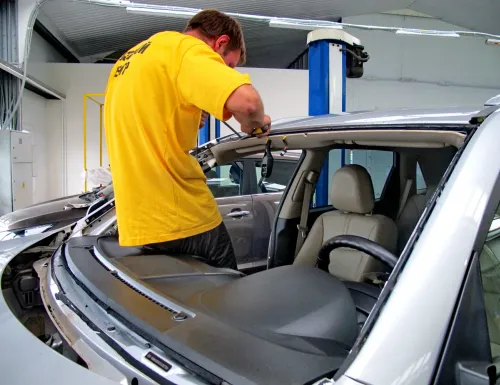
Seat covers, dash covers, and floor protection go on. Paint tape and foam pads protect the exterior finish around the windshield opening. Wiper arms, cowl trim, and exterior moldings are removed and laid out in sequence for reinstallation.
Old glass removal: 20 to 30 minutes
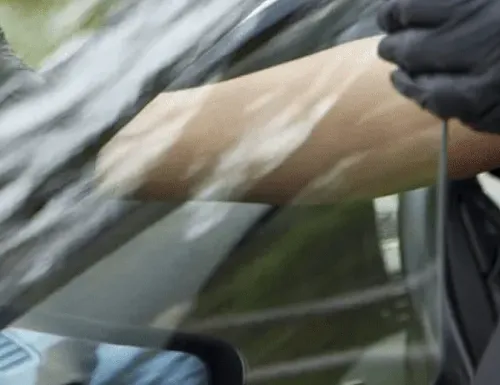
A cold knife or cutting wire works around the full perimeter, cutting through the cured urethane bond. The pace is deliberate. Forcing this step can bend the pinch weld — the metal channel the glass sits in — which creates sealing problems that may require body shop work to correct.
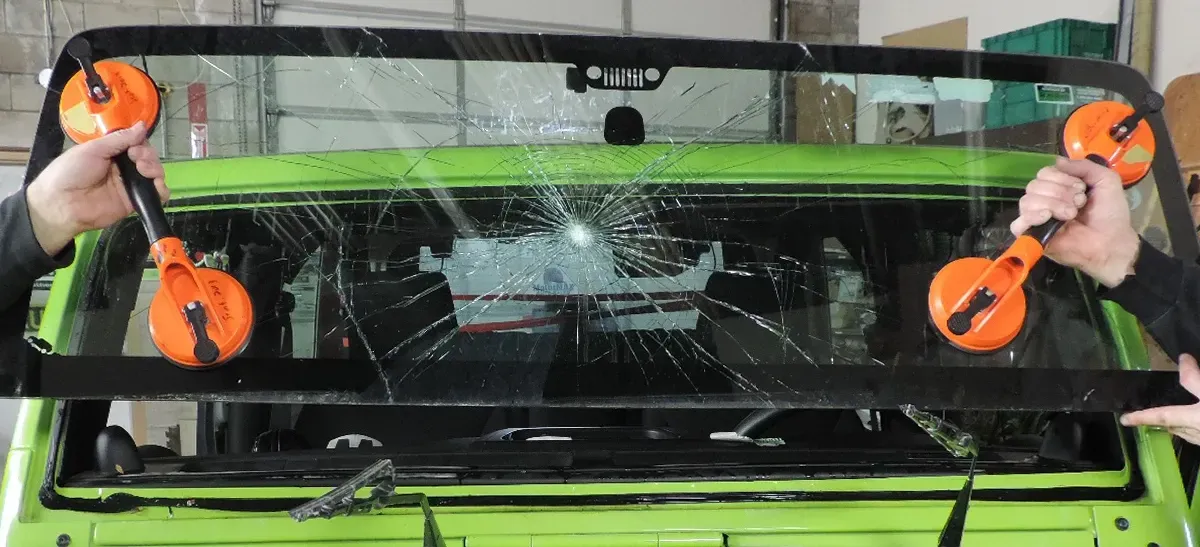
The damaged windshield lifts out with industrial suction cups.
Frame preparation: 15 to 20 minutes
This step determines the long-term quality of the installation. Old adhesive is trimmed to a thin, uniform layer — typically 1 to 2 millimeters. This retained layer is called a “short bead” and gives the new adhesive a better bonding surface than bare primer alone.
Any rust or corrosion on the pinch weld is treated before primer is applied. Both the frame and the edge of the new windshield receive a coat of urethane primer. The primer has an activation window — typically 3 to 60 minutes depending on formulation — so the technician applies it and begins adhesive work within that window.
New windshield installation: 15 to 20 minutes
A continuous bead of urethane adhesive runs around the full perimeter of the pinch weld. The bead profile matters: too thin and the bond is insufficient; too thick and the glass sits proud of the body panel surface.
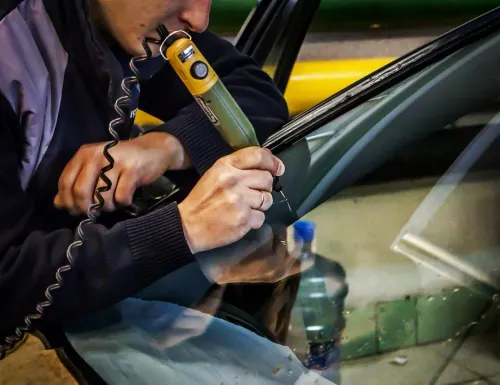
The new windshield is positioned with suction cups and set into the adhesive with even pressure across the full surface. Rain sensors, cameras, mirrors, and electronics are reattached. Wiper arms, cowl, and trim pieces go back on in reverse removal order.
ADAS calibration: 20 to 60 minutes (if needed)
Most vehicles built after 2018 have at least one forward-facing camera that requires calibration after windshield replacement. The camera sits behind the glass, and even a small variation in glass angle or surface curvature between the old and new glass can affect system performance.
We handle static calibration using manufacturer-spec target boards at precise distances and angles in our shop, and dynamic calibration requiring a road drive at specific speeds for camera systems that self-adjust in motion. Some vehicles need both.
Calibration typically runs during the cure window. The equipment and process run while the adhesive sets, so it does not always extend total elapsed time — it overlaps with time that would have been spent waiting anyway.
Final inspection and water test: 10 minutes
Every installation gets a water test before we return the vehicle. Low-pressure water is applied around the perimeter while the technician checks for seepage at any point in the seal. Electronics and sensors get a functional test. The glass is cleaned inside and out.
What goes wrong in rushed installations
The steps most commonly compromised in low-quality shops are frame preparation and cure time. Skipping primer, not trimming the old adhesive to a proper short bead, or releasing the vehicle before SDAT is reached all affect long-term seal integrity. A windshield installed over improperly prepped metal corrodes at the bond line and eventually leaks. One driven before SDAT means the adhesive was still pliable when highway wind load and door pressure hit it.
At Midtown Glass Atlanta, the efficiency comes from inventory availability, experienced AGSC-certified technicians, and IR cure equipment — not from shortcutting the steps that make the installation last.
FAQs
How long does same-day windshield replacement actually take? Total elapsed time is typically 2.5 to 3.5 hours, including all steps and cure time. Hands-on work runs 60 to 90 minutes. Cure and calibration fill the remaining time.
Can I get my windshield replaced the same day I call? In most cases, yes — if you call before noon and your vehicle’s glass is in stock. Midtown Glass Atlanta stocks more than 1,000 windshields specifically to make this possible for common Atlanta vehicles.
Is it safe to drive immediately after windshield replacement? No. SDAT must be reached first — typically 45 to 90 minutes after adhesive application under Atlanta conditions. Driving before SDAT risks windshield displacement in a collision and compromises airbag deployment geometry.
What happens if it rains during my mobile replacement? Light rain is managed with protective canopies. Heavy rain may require rescheduling or moving the service to our Midtown shop, where the covered bay eliminates weather variables entirely.
Call (404) 873-6991 or schedule online. Midtown Glass Atlanta, 510 Glen Iris Dr NE, Atlanta GA 30308. Same-day replacement, ADAS calibration, and mobile service across Metro Atlanta since 1956.