A chip in the lower-left corner of your windshield has been there for two weeks. Yesterday it sprouted a crack that ran six inches to the right. This morning it crossed your sightline. That chip just became an emergency.
Not every windshield problem demands same-day action, but some do. This guide covers how to tell the difference, what the emergency windshield repair process looks like in detail, and what changes when replacement is necessary instead of repair.
Why the windshield is engineered, not just glass
Your windshield is laminated safety glass: two tempered layers bonded to a polyvinyl butyral interlayer. In a rollover, that structure contributes 30 to 45 percent of the roof’s resistance to crush, depending on the vehicle design. Federal Motor Vehicle Safety Standard 216 sets the roof-crush load requirement, and the windshield’s bond to the vehicle frame is part of what makes that requirement achievable.
The passenger-side airbag also relies on the windshield. It deploys outward and uses the glass as a backstop to redirect the bag toward the passenger. A windshield that is already cracked at the edge or improperly bonded can blow out during deployment instead of holding position. That failure redirects the airbag away from the passenger.
These are the engineering reasons that windshield damage is treated as a safety issue rather than a cosmetic one.
Repair or replace: the real criteria
A technician can restore structural integrity with resin injection when:
- The chip is no larger than a quarter in diameter
- The crack is six inches or shorter
- The damage is not in the driver’s primary sightline (roughly the 12-inch zone centered behind the steering wheel)
- The damage does not reach the edge of the glass
- The polyvinyl butyral interlayer is intact and not separating from the outer glass
When those conditions are not all met, replacement is the right call. Specific situations that rule out repair:
Edge cracks. A crack within two inches of the windshield’s edge has no room to terminate. The edge is also where stress from the frame concentrates, so edge cracks spread faster than center cracks. In Atlanta’s climate, the thermal cycling between a 68-degree AC interior and a parking lot that reaches 150 degrees on the glass surface in July can push an edge crack across the entire windshield in hours.
Sightline damage. Georgia code (O.C.G.A. 40-8-73) prohibits driving with a windshield that impairs the driver’s view. A police officer has discretion to write a citation for any crack that crosses the sightline regardless of its length. More importantly, even a repaired crack that passes through the sightline can leave optical distortion that affects driving.
Multiple chips close together. Each chip weakens the surrounding glass. Clusters of chips create a fragile zone that is difficult to stabilize with resin and is likely to crack further.
Delamination. When you see a white or cloudy haze around the damage, the outer glass has begun separating from the PVB interlayer. Resin cannot restore a delaminated windshield.
Cracks longer than six inches. Resin can fill the void but cannot restore structural integrity across a large span.
The repair process in detail
When damage qualifies for repair, here is what happens step by step.
Cleaning the void. A narrow pick removes any loose glass fragments from inside the break. Any moisture in the crack is dried out before the technician proceeds. Resin will not bond correctly to a wet or contaminated surface, and any trapped moisture that later freezes will expand and re-crack the repair.
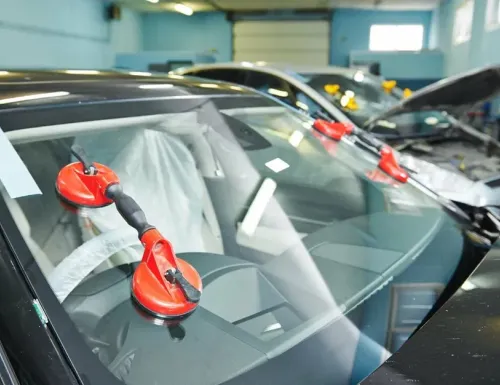
Attaching the vacuum bridge. A suction-cup bridge is centered over the break. It first applies a vacuum to pull remaining air from the void, then reverses pressure to push resin in.
Injecting the resin. Optically clear urethane resin fills the void under pressure. For chips, this is a one-step process. For longer cracks, the technician may reposition the bridge multiple times to work resin down the full length of the fracture.
UV cure. A UV lamp hardens the resin in about two minutes. The cured resin bonds to the surrounding glass and stops the crack from spreading further.
Surface polishing. Excess cured resin is scraped flush and the area is polished until the wiper blade can pass over it without catching. The repair will be visible at certain angles, but the structural integrity is restored.
Total time: 20 to 40 minutes. You can drive away immediately.
Atlanta’s thermal cycles and why timing matters
The weather pattern in Atlanta is harder on windshields than most drivers realize. A vehicle parked in a surface lot on a July afternoon can have an interior temperature above 130 degrees and a dashboard surface above 180 degrees. When you get in and run the AC, the glass faces an abrupt temperature drop. That thermal stress tests any existing damage.
A chip that was stable in mild weather can crack across the sightline during a lunch break in summer. Getting chips repaired promptly rather than waiting to “see what happens” is not overcautious. In a cooler climate, a chip might sit unchanged for weeks. In Atlanta, you may have days.
When replacement is necessary: what the process looks like
When damage is beyond repair, a full windshield replacement is the only option. Here is how it proceeds.
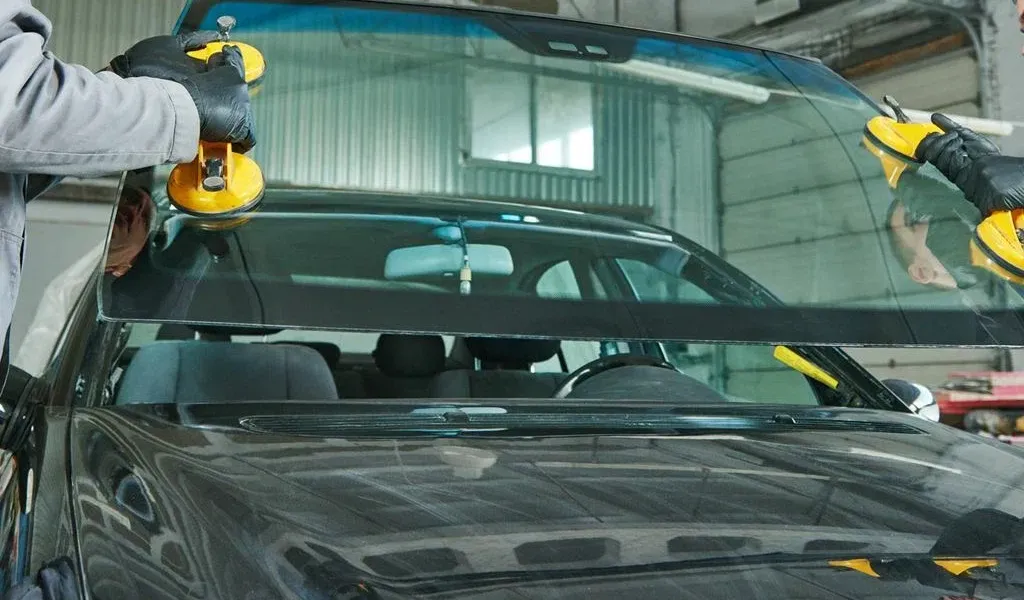
Removal. Specialized cold-knife tools cut through the urethane bead holding the old windshield without damaging the pinch weld (the metal lip around the opening) or the surrounding paint. Pry bars and brute force leave the pinch weld damaged and the next adhesive bond weaker.
Frame preparation. Old adhesive is trimmed to a uniform height and any exposed bare metal receives rust inhibitor. Primer is applied to both the pinch weld and the bonding surface of the new glass. Primer is not optional; it is the activating agent that allows urethane adhesive to bond at full strength. Skipping it is the single most common shortcut in low-quality installations.
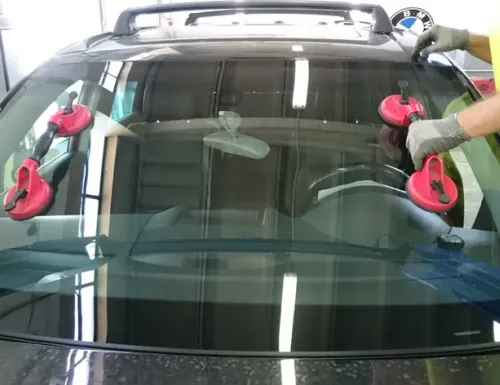
Installation. The new windshield is positioned with suction cups and aligned against factory reference points on the frame. The adhesive bead is pressed into even contact across the entire perimeter. Trim pieces, wipers, and cowl covers go back on once the glass is seated.
Cure time. The adhesive needs at least 30 to 60 minutes before driving. In Atlanta’s warm, humid climate, 45 minutes typically gets the adhesive to safe drive-away strength. In cold weather, allow closer to an hour. Do not slam doors during cure time; the pressure wave can shift the glass before the adhesive sets.
ADAS recalibration. If your vehicle has a forward-facing camera, the replacement windshield changes the camera’s effective aim point. Even OEM glass installed perfectly introduces small geometric differences that shift what the camera “sees.” We perform static calibration using manufacturer-specified targets before you drive. Skipping recalibration leaves your lane-departure system, forward-collision alert, and automatic emergency braking operating with incorrect baseline data.
OEM vs. aftermarket glass
OEM glass is made by the same supplier as your original windshield and matches the exact specifications including curvature, tint, UV coating, acoustic laminate, and the optical properties in the camera zone. Aftermarket glass meets basic safety standards but may vary in these details. For most vehicles without ADAS cameras, aftermarket is a reasonable choice. For vehicles where the camera zone optical properties matter for calibration accuracy, OEM is the better call.
Cost and insurance
Repair typically runs $75 to $125. Most comprehensive auto insurance policies cover repairs at zero deductible, since repairing a small chip costs the insurer far less than paying for a full replacement later.
Replacement ranges from $200 to $500 for most passenger vehicles. ADAS vehicles with acoustic or heated glass cost more due to glass specifications and the added recalibration step. Luxury and European vehicles with integrated rain sensors, HUD projections, or specialized coatings are on the higher end.
We verify your insurance coverage before any work begins and bill the insurer directly in most cases.
When to call us
Call (404) 873-6991 for same-day emergency windshield service if:
- You have a chip that is growing or is near your sightline
- Any crack is longer than three inches
- Any crack reaches the edge of the glass
- A rock or debris impact left damage you have not assessed yet
- Your windshield is shattered or has a spiderweb pattern
Mobile service is available across Metro Atlanta. For vehicles close to Midtown, our shop at 510 Glen Iris Dr NE is often faster. We will tell you which option makes more sense based on your location and the specific damage when you call.
For guidance on what to expect from the service call itself and how to prepare your insurance information in advance, see our guide on emergency glass repair services in Atlanta.
Contact Midtown Glass Atlanta for Emergency Windshield Repair in Atlanta
When you need urgent windshield repair or emergency glass service in the Atlanta metro area, Midtown Glass Atlanta is here to help. We offer fast response times with mobile service across the entire metro area.
Phone: (404) 873-6991
Request emergency service now - do not risk driving with a damaged windshield.