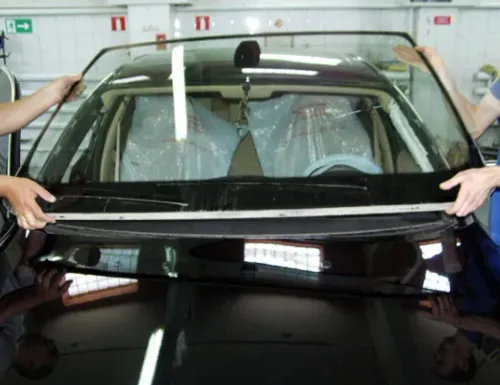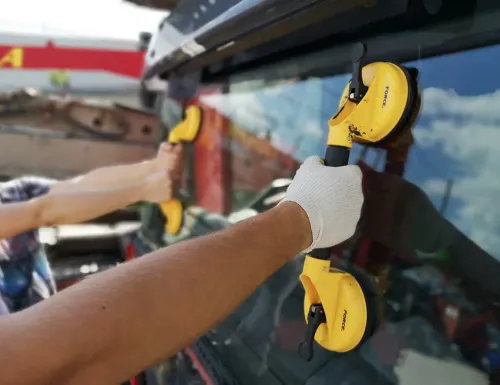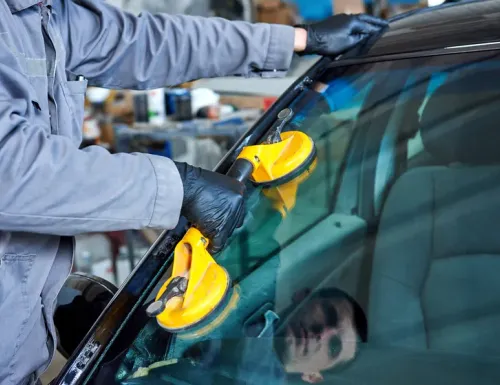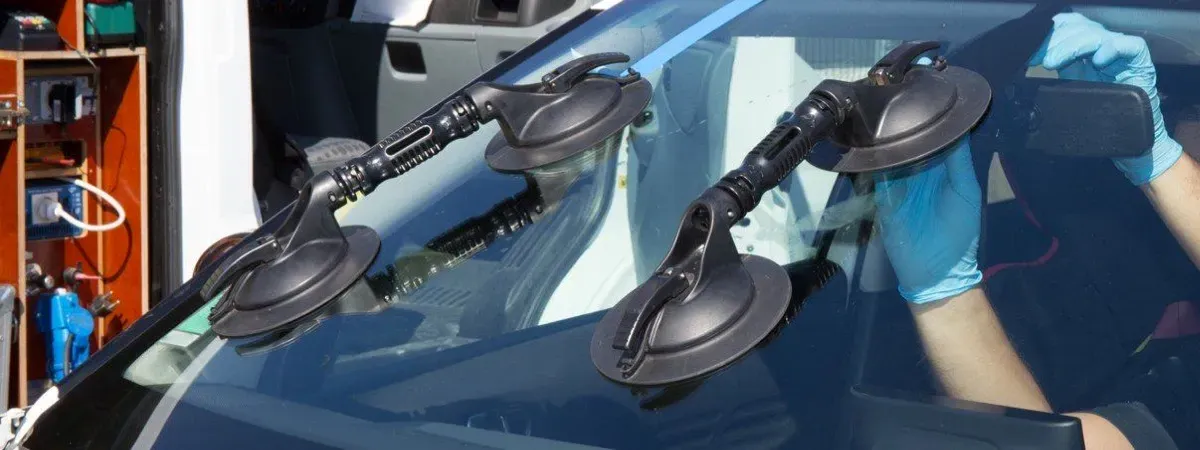
Windshield chips get most of the attention, but auto glass problems go well beyond the front glass. At Midtown Glass Atlanta, we handle everything from windshields to rear glass, side windows to quarter panels, seal failures to ADAS camera problems — and each category has its own causes, failure modes, and correct response.
After serving Metro Atlanta since 1956 at our shop at 510 Glen Iris Dr NE, we see the same problems repeat across thousands of vehicles each year. Here are the seven that show up most often, what causes them, and what the correct fix looks like.
1. Windshield chips from highway debris
The most frequent call we receive. A rock kicked by a semi-truck on I-75, loose aggregate from a construction zone near Spaghetti Junction, or a pebble bounced off the concrete median on I-85 through Midtown — the result is a small impact point in the outer glass layer.
The mark itself is rarely the problem. What turns a $70 repair into a $350 replacement is heat. Atlanta windshield surface temperatures routinely exceed 140 to 150 degrees in July. The exterior glass heats faster than the interior layer, and that temperature gradient pushes any existing fracture outward. A bullseye chip that was comfortably within repair limits on Monday morning can have a four-inch crack running from it by Tuesday afternoon if the car sat in direct sun.
The fix: Chips smaller than about one inch in diameter are repairable with resin injection in 20 to 30 minutes. Chip repair costs $50 to $80 and is often covered at zero deductible under comprehensive auto insurance. Waiting costs money — sometimes a lot of it.
2. Spreading windshield cracks
Cracks can begin several different ways. An unrepaired chip develops a traveling fracture. A rock impact creates a linear break rather than a circular one. Thermal shock from blasting the defroster on a frozen January windshield starts a stress crack from the edge. Or the glass shifts slightly after a minor fender bender and a pressure crack appears without any impact history.
Once a crack starts moving, it does not stop on its own.
Common crack types and what they mean:
| Type | Where it starts | Spread rate | Repairable? |
|---|---|---|---|
| Stress crack | Edge, no impact point | Fast | No |
| Edge crack | Within 2 inches of frame | Very fast | Rarely |
| Floater crack | Center glass field | Moderate | Depends on length |
| Propagating chip crack | From existing chip | Variable | Under 6 inches, sometimes |
The fix: Cracks under six inches that have not reached the windshield edge can sometimes be stabilized with a drill-stop and resin fill. Longer cracks, edge cracks, and stress cracks require full windshield replacement with OEM-quality glass and proper adhesive cure time.
3. Windshield seal failures and water intrusion
The urethane adhesive and rubber molding bonding your windshield to the frame can deteriorate over time. Atlanta’s combination of UV intensity (roughly 217 sunny days per year), high summer humidity, and significant temperature swings accelerates rubber seal degradation compared to northern states.
Signs of a seal problem:
- Water dripping inside after rain, most often at the lower corners or along the bottom edge
- Musty or mildew odor in the cabin that persists after cleaning
- Whistling wind noise at highway speed that appeared gradually
- Visible gaps between the windshield trim and glass at any corner
Seal failures matter beyond the inconvenience of a wet floorboard. Water that enters the frame channel reaches the pinch weld — the metal channel the windshield bonds to. Repeated moisture exposure corrodes that metal. A corroded pinch weld weakens the structural bond between glass and frame, which is a safety issue in any impact scenario. Atlanta’s humidity means moisture inside the frame stays there longer and promotes faster corrosion than in drier climates.
The fix: Minor gaps can sometimes be resealed without removing the glass. If the pinch weld has corroded or the glass has shifted in the frame, full removal and reinstallation is necessary. We inspect the seal, frame channel, and drainage paths before recommending the right approach.
4. Rear windshield damage
The back glass faces different hazards than the front. It is exposed to tailgate impacts in parking lots, rocks thrown rearward at highway speed, and the internal mechanical stress that comes from defrost lines bonded to its interior surface. Unlike the front windshield, rear glass is tempered rather than laminated. When tempered glass fails, it shatters completely into small cubes rather than holding together. That is by design and is safer for occupants, but it means the entire pane must be replaced rather than repaired.
Common rear glass issues:
- Impact damage: Any significant crack in tempered rear glass means replacement. The glass may hold briefly but can shatter fully at any time.
- Defrost line damage: A crack crossing a heating element disables that defroster section. Rear visibility in fog or cold is reduced until the glass is replaced.
- Rear wiper seal failure: On vehicles with a rear wiper mounted through the glass, the rubber seal at that point can fail and allow water intrusion.
The fix: Rear glass is always replaced, never repaired. Cost varies by vehicle — most sedans and SUVs run $200 to $400. Vehicles with heated rear glass, integrated antennas, or privacy glass run higher. Most rear glass replacements are same-day.
5. Side window and door glass failure
Door glass and quarter windows are tempered and designed to shatter into small cubes on impact to protect occupants from sharp edges. When side glass fails, it is almost always sudden and total.
Common causes: vandalism, power window regulator failure (glass drops into the door and shatters at the bottom), hail from Atlanta’s spring and summer storms, or objects expanding against frameless windows in summer heat.
The fix: Side glass is always replaced. Most replacements are same-day and run $150 to $350 depending on the vehicle. Frameless or specialty windows (heated, integrated antenna) cost more. If a failed regulator caused the break, it should be inspected before the new glass goes in.
6. Pitting and surface erosion
Pitting is the cumulative effect of thousands of tiny debris impacts at highway speed. Fine sand, road grit, and particles from deteriorating road surfaces sandblast the outer glass surface gradually, creating microscopic craters that scatter light.
Drivers who commute daily on I-285 through the Spaghetti Junction interchange or on I-85 through the active construction zones in Gwinnett County accumulate pitting faster than average. The hazard is not structural — pitting does not weaken the glass or spread like a chip. The hazard is visual.
Signs of significant pitting: starburst glare from oncoming headlights, a hazy windshield exterior that does not clear after cleaning, and worsening glare when driving toward direct sun (east-bound morning commutes on I-20 are particularly noticeable). Pitting cannot be repaired. Once the surface is compromised across a significant area, replacement is the only solution — and most drivers are surprised by how much clearer the view is afterward.
7. ADAS camera misalignment after glass service
This is the newest category on the list and the one most drivers do not realize they have. Vehicles with Advanced Driver Assistance Systems use a camera mounted to the windshield near the rearview mirror for lane departure warning, automatic emergency braking, and adaptive cruise control. After any windshield replacement, that camera must be recalibrated to factory specifications.
When calibration is skipped or done incorrectly, the camera is aimed slightly off from where the system expects it to be. The safety technology then sees the world at a slight offset from reality.
Signs of a calibration problem:
- Lane departure warning triggering when you are clearly centered in a well-marked lane
- Adaptive cruise behaving erratically or failing to maintain distance correctly
- Forward collision alert activating on clear roads with no vehicle ahead
What causes it:
- A windshield replacement where the shop skipped calibration to save time or cost
- Calibration performed with generic equipment instead of manufacturer-approved targets
- A significant impact that shifted the camera bracket without cracking the glass
The fix: Static calibration uses a target board placed at a precise distance and angle in front of the vehicle and runs the manufacturer’s calibration sequence. Dynamic calibration requires driving at a specific speed on clearly marked roads. Many vehicles need both. Midtown Glass Atlanta uses OEM-specification calibration equipment for all major manufacturers and confirms system accuracy before returning the vehicle.
When to repair vs. when to replace
| Problem type | Repair possible? | Replacement needed? |
|---|---|---|
| Chip under 1 inch, not at edge or sight line | Yes | No |
| Crack under 6 inches, not at edge | Often yes | Sometimes |
| Crack over 6 inches | No | Yes |
| Stress or edge crack | No | Yes |
| Seal failure | Sometimes | If pinch weld corroded |
| Rear glass crack or shatter | No | Yes |
| Side glass failure | No | Yes |
| Significant pitting | No | Yes |
| ADAS misalignment | N/A (calibration needed) | Only if glass is also damaged |
Frequently asked questions
Can a chip really spread across the whole windshield? Yes. In Atlanta’s summer heat, a chip can become a full-length crack in 48 hours if the car sits in direct sun. Early repair is the most effective prevention.
How do I know if my rear windshield is about to fail? Tempered glass fails quickly — a crack appears and the glass often shatters almost simultaneously. Any visible crack in rear glass means schedule replacement now, not later.
Why is there a whistling sound from my windshield? Whistling almost always points to a seal problem. Either the rubber molding has pulled away from the glass at one or more points, or a previous installation was not bonded correctly at the perimeter. Both are fixable. Come in for a free inspection and we will find the gap.
Should I worry about ADAS calibration after a chip repair? If a chip was repaired and the glass was never removed, calibration is typically not needed. If the windshield was replaced or the camera bracket was disturbed during any work, calibration is required. Skipping it leaves your safety systems operating on inaccurate alignment data.
Call Midtown Glass Atlanta at (404) 873-6991 or schedule online for same-day service at our Midtown shop or through our mobile units across Metro Atlanta.