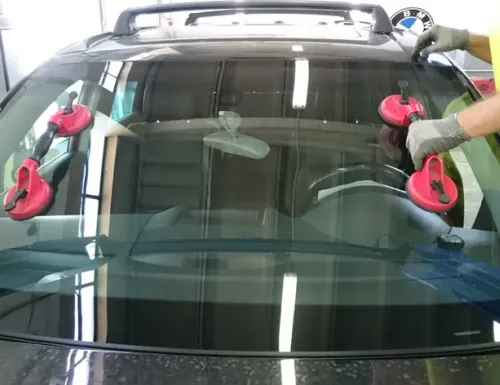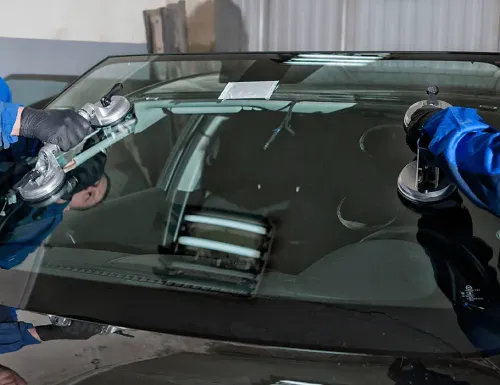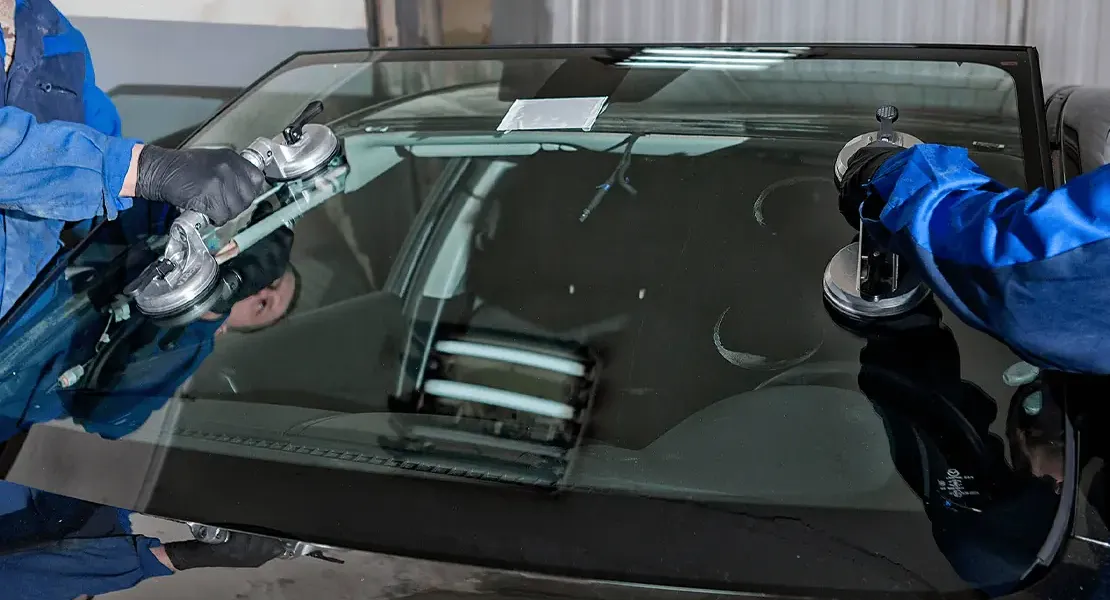
Most drivers know their windshield is glass. Fewer know it is a laminated structural composite that contributes to roof crush resistance, provides the backstop for the passenger airbag, and in newer vehicles houses a camera that runs the collision avoidance system. Understanding what your auto glass is made of — and why each component exists — makes repair and replacement decisions significantly easier.
This is what is actually inside the glass in your vehicle.
Laminated Glass: The Engineering Behind Your Windshield
A windshield is not a single pane of glass. It is a sandwich: two glass layers bonded to a thin interlayer of polyvinyl butyral (PVB), typically 0.76 millimeters thick. This structure is what makes windshields behave so differently from side and rear windows.
Why lamination matters for safety: When a rock hits your windshield, the outer glass layer cracks but the PVB interlayer holds the assembly together. Instead of showering the occupants with glass fragments, the windshield cracks and sags but stays in one piece. This is intentional. Federal Motor Vehicle Safety Standard 205 requires windshields to remain intact on impact precisely because of what happens to occupants when they do not.
The structural role of the windshield: A properly installed windshield is load-bearing. It contributes up to 60 percent of a vehicle’s roof crush resistance during a rollover, according to NHTSA testing. It also acts as a backstop for the passenger-side airbag — the airbag deploys against the windshield and is directed back toward the occupant. A windshield that was poorly installed (wrong adhesive, skipped primer, inadequate cure time) may pop out in a crash rather than provide structural support.
Why chips and cracks can be repaired: The PVB interlayer is what makes repair possible in the first place. When a rock impact creates a void in the outer glass layer, resin can be injected and cured within that outer layer while the PVB holds everything in position. Once the crack reaches the inner glass layer or the PVB itself, repair is no longer viable and replacement is required.
Tempered Glass: Side and Rear Windows
Side windows and most rear windows use tempered glass, produced by heating the glass to approximately 620 degrees Celsius and then rapidly cooling it. This creates compressive stress in the outer surfaces and tensile stress in the interior, making the finished glass four to five times stronger than untreated glass of the same thickness.
The useful property of tempered glass is its failure mode. When it breaks, it shatters into roughly cubic fragments — small and relatively blunt rather than the sharp shards produced by untreated glass. This reduces laceration risk in accidents and allows occupants to break a side window for emergency escape.
The trade-off: tempered glass cannot be repaired. Any crack or chip requires full replacement of the pane. There is no resin injection option because the compressive stress pattern in tempered glass makes any penetration of the surface unpredictable.
Some newer luxury and performance vehicles use laminated glass for side windows, primarily for two reasons: better sound isolation (the PVB interlayer absorbs road noise that would pass through tempered glass) and security (laminated side glass does not shatter on impact, making it significantly harder to break through in a smash-and-grab theft). Laminated side windows are increasingly common in the upper trims of European sedans and in some Japanese luxury vehicles. They cost more to replace than standard tempered glass, but the noise reduction and theft resistance are measurable.
Technology Built Into Modern Windshields
Auto glass has become a platform for vehicle systems over the past decade. Here is what manufacturers embed:
ADAS Camera Integration
The most significant change in windshield engineering is the forward-facing camera. Vehicles produced since roughly 2015 have progressively integrated a camera behind the rearview mirror that reads lane markings, detects vehicles ahead, and processes road sign data. This camera powers:
- Lane departure warning
- Automatic emergency braking
- Adaptive cruise control
- Traffic sign recognition
The windshield glass in the camera’s field of view must be optically precise. After any windshield replacement, the camera must be recalibrated — the new glass sits in a slightly different position than the old one, and even a small angular error causes the systems to misread lane position or misjudge distances.
Static calibration uses precision targets positioned at specific distances in front of the vehicle. Dynamic calibration requires a drive with diagnostic equipment connected. Some vehicles need one method, some need both. This step cannot be omitted for vehicles that have it. Midtown Glass Atlanta handles ADAS calibration in-house with factory-grade equipment for both methods.
Acoustic Windshields
Standard windshields use 0.76mm PVB interlayers. Acoustic windshields use either a thicker single layer (1.52mm or 2.28mm) or a dual-layer PVB construction with a sound-absorbing compound between the layers. The result is 2 to 5 decibels of noise reduction compared to standard glass.
That difference is clearly noticeable at highway speeds, particularly on I-285 and GA-400 where tire and wind noise is significant. If your vehicle came with an acoustic windshield from the factory — common on Honda, Toyota, and most premium brands — replacing it with standard aftermarket glass will produce a perceptible increase in interior noise. When we replace acoustic windshields, we match the acoustic specification.
Solar Glass
Solar windshields incorporate metallic or ceramic particles within the glass or PVB layer that reflect infrared solar radiation rather than absorbing it. Standard glass transmits most of the sun’s infrared heat into the vehicle’s interior. Solar glass can reduce interior temperatures by 15 to 20 degrees on a Georgia summer day, which reduces air conditioning demand and keeps the dashboard and upholstery from degrading as quickly.
Solar glass typically has a slight blue or green tint from the infrared-reflective particles. Some manufacturers offer it as a standard feature; others make it optional. If you have solar glass and need a replacement, tell the shop — the replacement needs to match.
Heads-Up Display Glass
Vehicles with heads-up displays (HUD) project navigation data, speed, and alerts onto the lower portion of the windshield. The display is a reflection visible only to the driver at their seating position.
HUD windshields require a slight wedge shape in cross-section to prevent double images. When a HUD projects onto standard parallel-faced glass, two reflections appear — one from the outer glass surface and one from the inner surface. The wedge shape offsets these so they overlap at the driver’s eye position. Replace a HUD windshield with standard glass and the display appears doubled or ghosted.
When replacing a HUD windshield, OEM or OEE glass with the correct wedge profile is required. This is not interchangeable with standard glass of the same vehicle.
Rain Sensors and Embedded Antennas
Optical rain sensors mounted to the windshield interior detect water droplets on the glass and activate automatic wipers. The glass in front of the sensor must be clear and free of coatings that would scatter the sensor’s infrared beam. Some aftermarket windshields have coatings that interfere with sensor readings.
Many vehicles have antenna elements or heating elements printed directly onto the glass. Rear windows with defroster grids are the most common example, but front windshields increasingly carry FM/AM antenna grids, GPS signal boosters, and heating elements for the wiper rest zone.
Maintenance Through the Engineering Lens
Knowing how auto glass is built makes maintenance decisions more logical:
Chips spread in heat because of thermal expansion: Glass expands when heated. A chip with a propagating crack is a stress concentration. When surface temperatures on parked Atlanta vehicles climb past 150 degrees in summer, that stress point is where the crack extends. Repair chips quickly — the urgency is physics, not sales pressure.
Wiper blade damage is cumulative and invisible: The outer glass surface is harder than the PVB layer but softer than most people assume. Grit on aging rubber wiper blades cuts microscopic channels into the surface with each pass. These are invisible in daylight and dangerous at night when oncoming headlights scatter through them. Replace wiper blades every six to 12 months.
Pollen is chemically active on glass: Pine pollen contains compounds that can bond with glass surfaces when heated. Atlanta’s spring pollen season (February through April) presents a real etching risk for windshields that are left coated and parked in direct sun. Rinse vehicles every day or two during peak pollen weeks.
Interior film is a ventilation and chemistry issue: The hazy coating on the inside of your windshield is from dashboard and upholstery plastics off-gassing in heat. It is not glass degradation — it can be cleaned off with automotive glass cleaner and a microfiber cloth. Clean the inside of your windshield monthly.
Expert Auto Glass Service in Atlanta
Midtown Glass Atlanta operates from 510 Glen Iris Dr NE, Atlanta GA 30308. Our AGSC-certified technicians work on all vehicle types and glass configurations. We stock OEM and OEE glass, handle ADAS calibration in-house, and provide all-inclusive quotes that cover everything before work begins.
Call (404) 873-6991 or schedule online.
Explore our auto glass services or learn about windshield replacement.