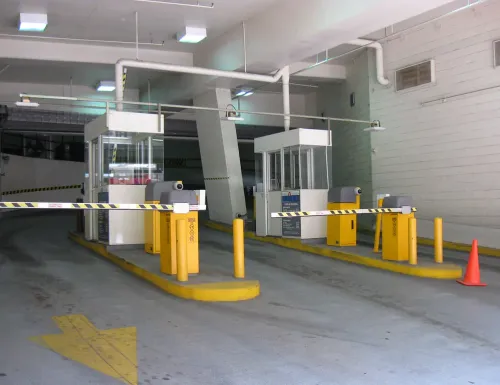
Living in a tower off West Peachtree or Juniper solves parking and creates a different problem: your car lives behind a gate arm, four levels down, in a structure that was designed to store vehicles rather than work on them. When the windshield cracks, the first question is not what the glass costs. It is whether anyone can physically reach the car.
Here is how that actually plays out in Midtown, and where the honest limits sit.
The gate is the easy part
Every controlled-access deck we visit has a way to let a vendor in. Some buildings issue a temporary fob at the desk, some register the van’s plate for the day, some just send a concierge down with you. What none of them do is let a stranger tailgate through the arm. Call the front desk or your property manager the day before, give them the company name and the approximate arrival window, and the visit takes two minutes instead of forty.
If you are renting, the lease usually points at a management portal for vendor registration rather than the leasing office. That distinction has cost more appointments than any technical issue on this list.
Clearance is the hard part
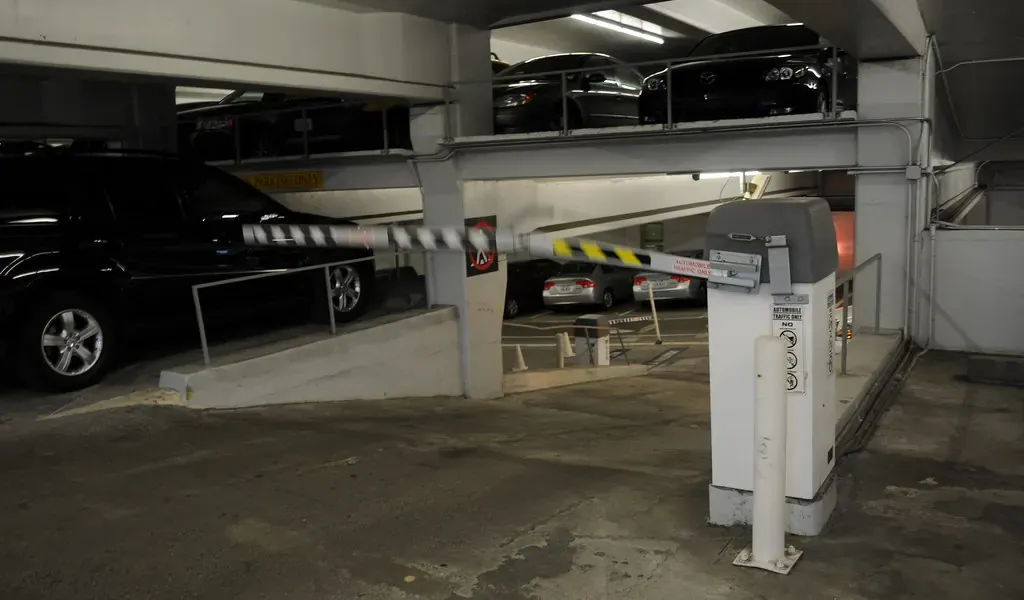
A cargo van carrying an exterior glass rack generally measures over seven feet at the top of the rack. Plenty of intown decks post less than that, especially the older structures behind Peachtree Place and the ones tucked under buildings that predate the current residential wave. The posted number at the entrance is the number that matters, and it is measured to the lowest obstruction, which is often a sprinkler main or a duct halfway down a ramp rather than the entry beam itself.
Read the sign, take a photo of it, and send it when you book. If the deck cannot take the van, there are usually two workable answers: the loading dock, which is built for delivery trucks and almost always has more headroom, or a surface space on the street. Buildings on 10th, 12th and Spring Street frequently have a dock entrance on the side street that residents never use.
Weather, cure time, and why a deck is not automatically better than a driveway
A deck keeps rain off the pinchweld, which genuinely helps. What it does not do is hold temperature or humidity. Windshield urethane is moisture-curing, and the Auto Glass Safety Council is direct about the consequence in its guidance on minimum drive-away times: the safe interval depends on which adhesive product was used and on the conditions where the work happened. Cold, dry air stretches it. A January morning on level 5 of an open-air deck is colder than the street outside, because concrete holds the overnight low.
That matters because the windshield is structural. Under FMVSS 212, a vehicle striking a fixed barrier at up to 48 kilometers per hour has to retain at least half of the windshield perimeter on each side of the centerline if it has passive restraints. A bond that has not cured cannot do that, and the passenger airbag on most cars deploys upward off the back of the glass. Driving away early is not a small shortcut.
Light, dust and the pinchweld
When the old glass comes out, the pinchweld underneath gets inspected. Corrosion hiding under the original urethane bead has to be dealt with before new glass goes in, and AGSC’s guidance on corrosion treats it as a stop condition rather than a judgment call. You cannot assess a pinchweld properly by phone flashlight under a sodium fixture on P4.
Construction dust is the other deck problem. Several Midtown towers have been in renovation for the last few years, and the fine grey film that settles on cars parked near a work zone also settles on a freshly primed bonding surface. Urethane bonds to primer, not to dust.
What we will do in your deck, and what comes to Glen Iris
Chip repairs travel well. The footprint is small, the resin cures under a UV lamp rather than sunlight, and nothing about a deck interferes. Side and door glass replacement is usually fine too, as long as the van fits and there is room to open the door fully.
Windshield replacement in a deck is a case-by-case call. Temperature, the deck’s cleanliness and how long you can leave the car sitting all feed into it.
Static ADAS calibration does not travel. Cars with a forward-facing camera behind the glass need that camera re-aimed after the windshield is replaced, and the static procedure sets physical targets in front of the vehicle at distances and heights the carmaker specifies. It needs a level floor, measured clear space and controlled lighting. Parking decks are sloped on purpose so water drains, and no level of any deck in Midtown is flat enough to satisfy an OEM procedure. Some vehicles accept a dynamic calibration instead, meaning a drive at a held speed on roads whose lane markings are in good shape, and a few need both. AGSC keeps a running list of make-specific calibration service bulletins that shows how narrow those requirements get.
When your car needs a calibration, the job comes to the shop at 510 Glen Iris Dr NE. Calibration costs $150 to $400, with the carmaker’s procedure setting where you land, and we bundle it with the replacement when both happen here.
In short, this is what happens where:
| Job | Done in your deck? | What decides it |
|---|---|---|
| Chip repair | Yes | Small footprint, UV lamp cure, nothing about a deck gets in the way |
| Door or side glass | Usually | The van has to fit and the door has to open fully |
| Windshield replacement | Case by case | Deck temperature, dust from nearby work, how long the car can sit |
| Static camera calibration | No, it comes to 510 Glen Iris Dr NE | Needs a level floor, measured space and controlled light; decks slope to drain |
Your building may have rules of its own
Condo and HOA documents often carry a clause prohibiting vehicle repair or maintenance in common areas, written decades ago with oil changes in mind. Many buildings also require a vendor certificate of insurance on file before anyone works on the property, and some restrict work to weekday business hours. We are open Monday through Friday, 8am to 5pm, which lines up with most of those windows, and we can send a certificate to your manager on request.
Ask, and get the answer in writing. A resident who checked beats a technician who gets turned around at the desk.
The short version
Send us the deck’s posted clearance, the level your space is on, and whether the building has a loading dock. That is enough for us to tell you on the phone whether the work happens where the car sits or at the shop. Drivers in Midtown, Buckhead and Brookhaven deal with this constantly, and the answer is rarely the same twice.
If you are weighing the trip in against a visit, our comparison of walk-in versus mobile service intown lays out the tradeoffs. Renters in low-rise buildings and townhomes have a slightly different set of constraints, covered in where a mobile tech can legally work. Call (404) 873-6991 or use the quote form to get started.
Common questions
Will a mobile auto glass van fit in my apartment parking deck?
It depends on the posted clearance. A cargo van with an exterior glass rack generally stands over seven feet at the top, and many older intown decks post less. The sign at the entrance is measured to the lowest obstruction, which may be a pipe halfway down a ramp. Photograph it and send it when you book, and we will plan around the loading dock or a surface space if needed.
Do I need to tell my building before a glass technician comes?
Yes, and a day ahead is ideal. Controlled-access decks will not let a stranger follow someone through the gate arm, so give the front desk or property manager the company name and an arrival window. Renters often register vendors through a management portal rather than the leasing office. That small step turns a forty-minute standoff at the gate into a two-minute check-in.
Can you calibrate my car's camera inside a parking garage?
No. Static calibration sets physical targets at distances and heights the carmaker specifies, and it needs a level floor, measured clear space and controlled lighting. Parking decks slope on purpose so water drains, so none of them qualify. Cars that need calibration come to our shop at 510 Glen Iris Dr NE, where the calibration costs $150 to $400 and is bundled with the windshield.
Can my condo association stop a windshield job in the garage?
It can. Many condo and HOA documents prohibit vehicle repair in common areas, and some buildings also require a vendor certificate of insurance or limit work to weekday hours. Our hours are weekdays from 8am to 5pm, and we can send a certificate to your manager on request. Ask the building before the appointment and get the answer in writing.